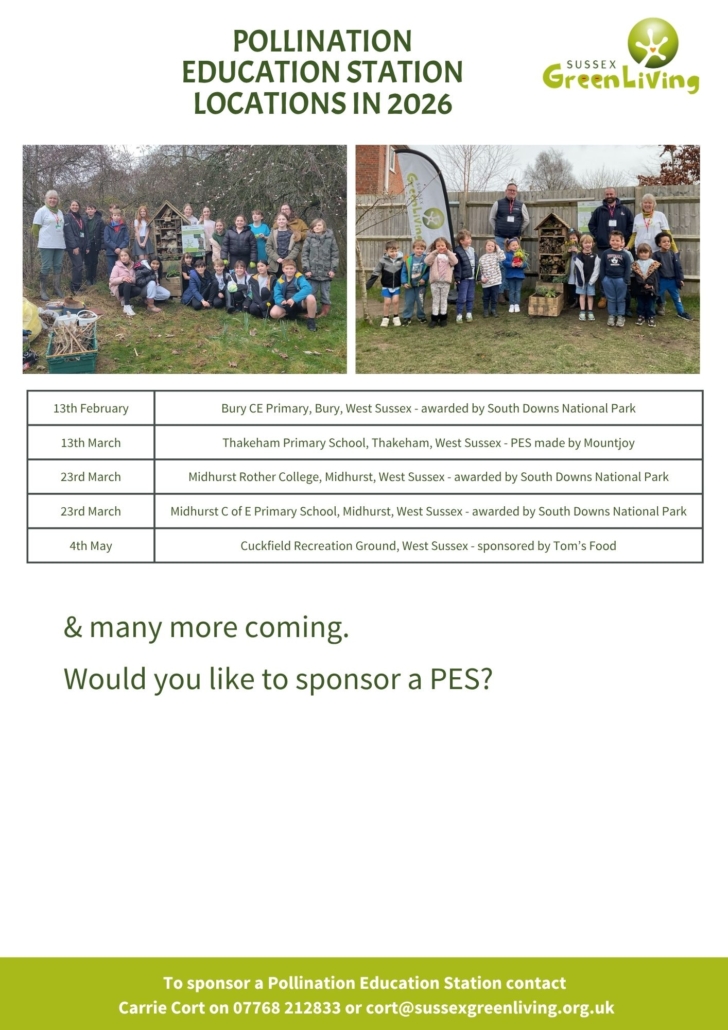
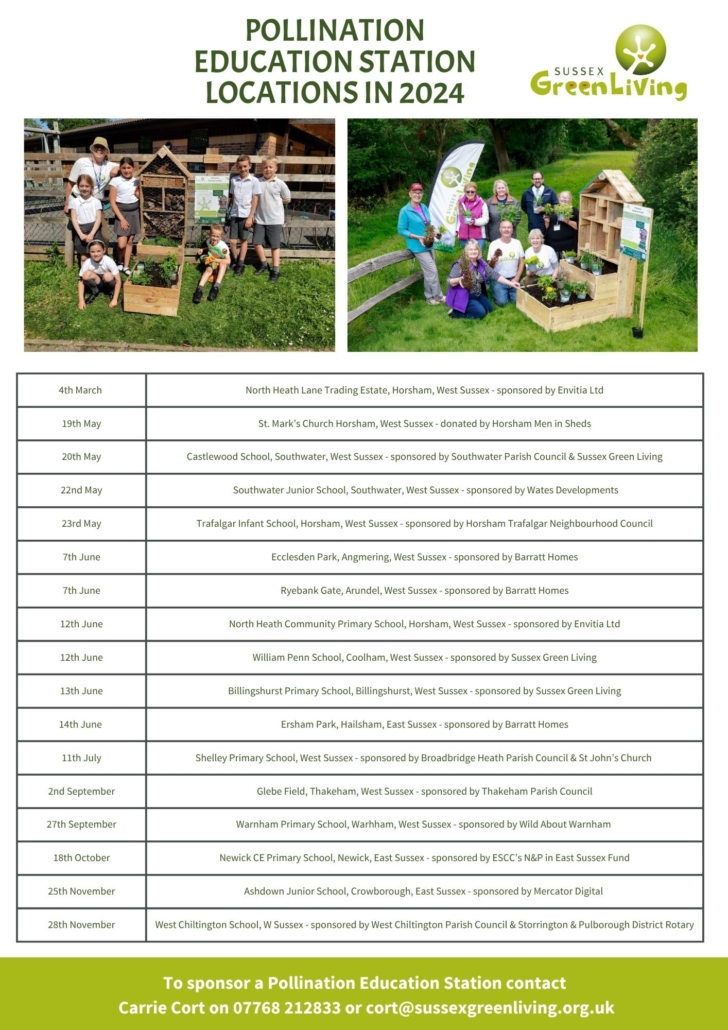
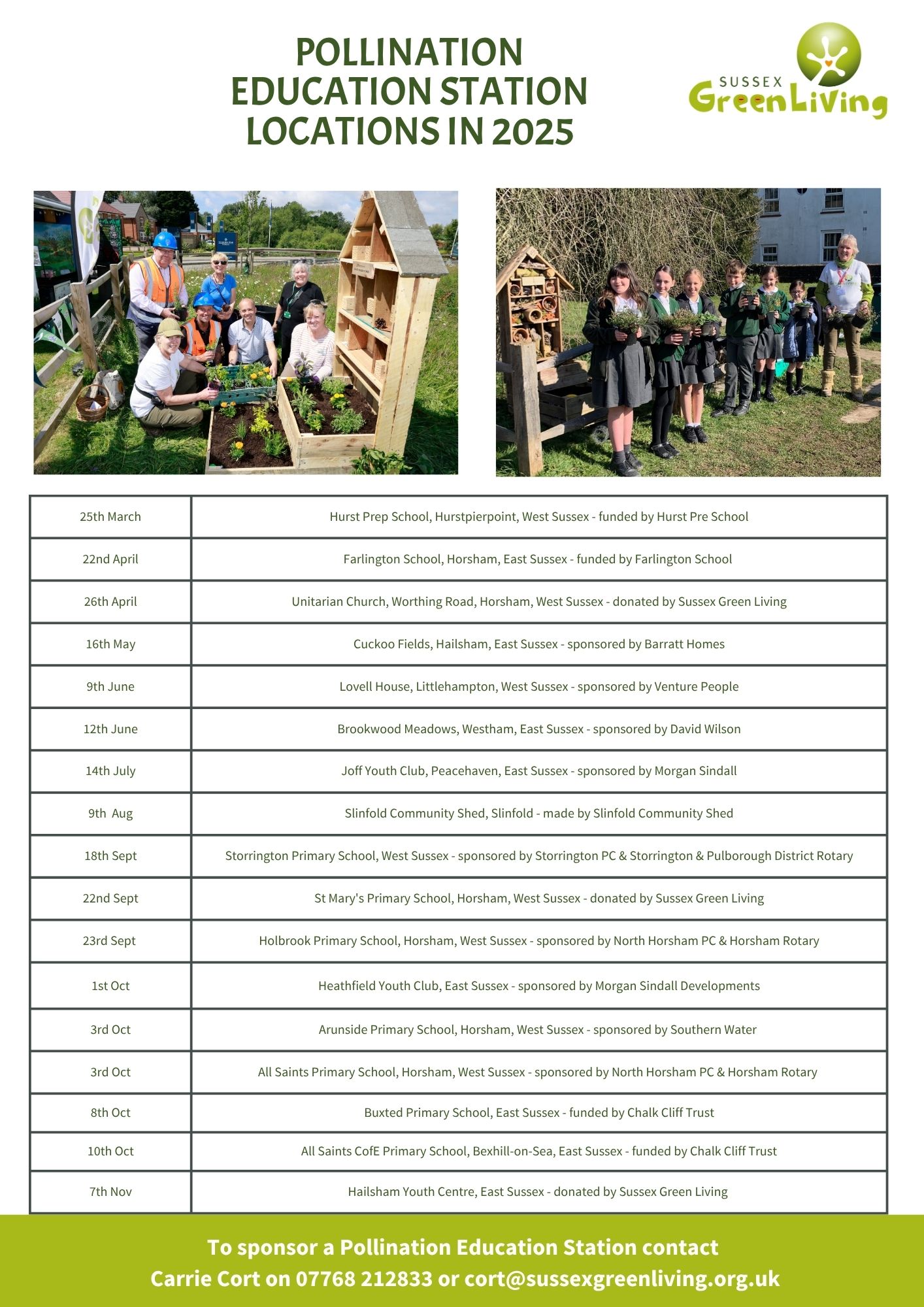
In 2024, we launched our Pollination Education Station (PES) Trail as a way of providing habitat and food for pollinators and education for the surrounding community.

The creation and installation of PES is a community effort involving several local groups. Pollination Education Stations have been funded by businesses, grants, churches, parish councils, schools and the Rotary. Located outside businesses, parks, church and school grounds this trail is continuing to grow.

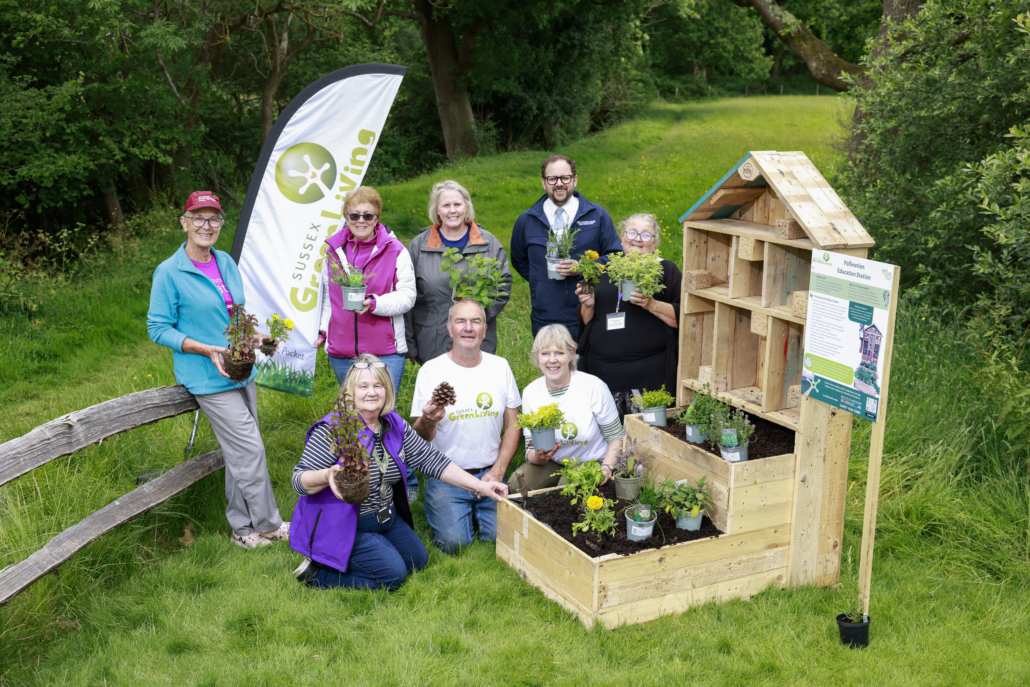
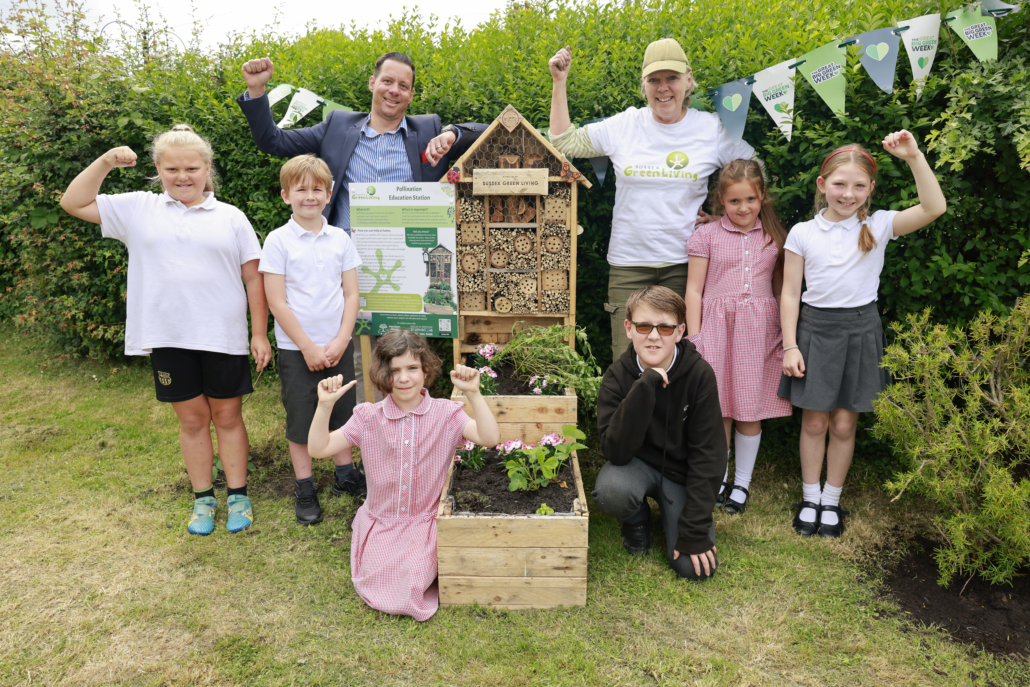
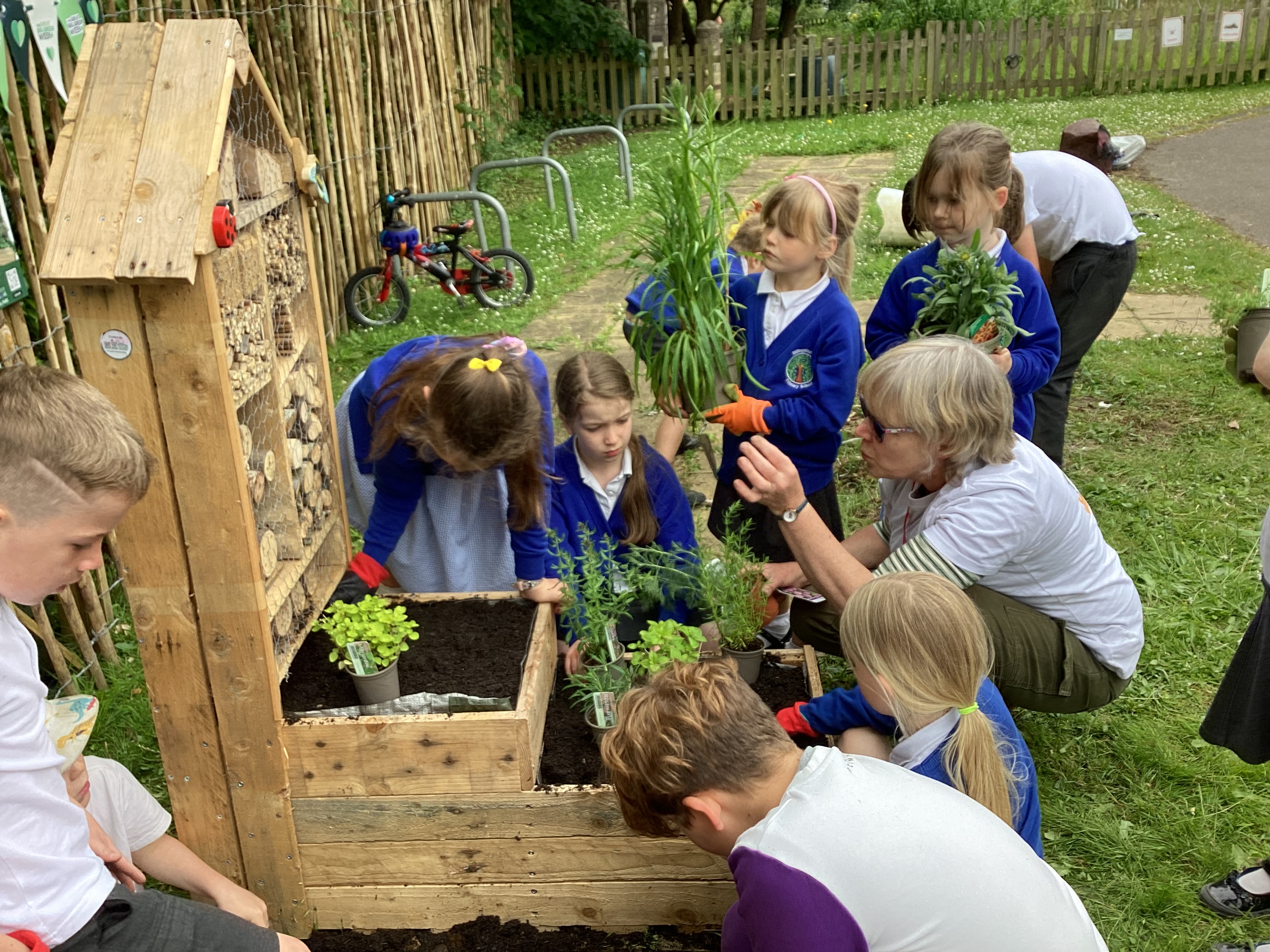
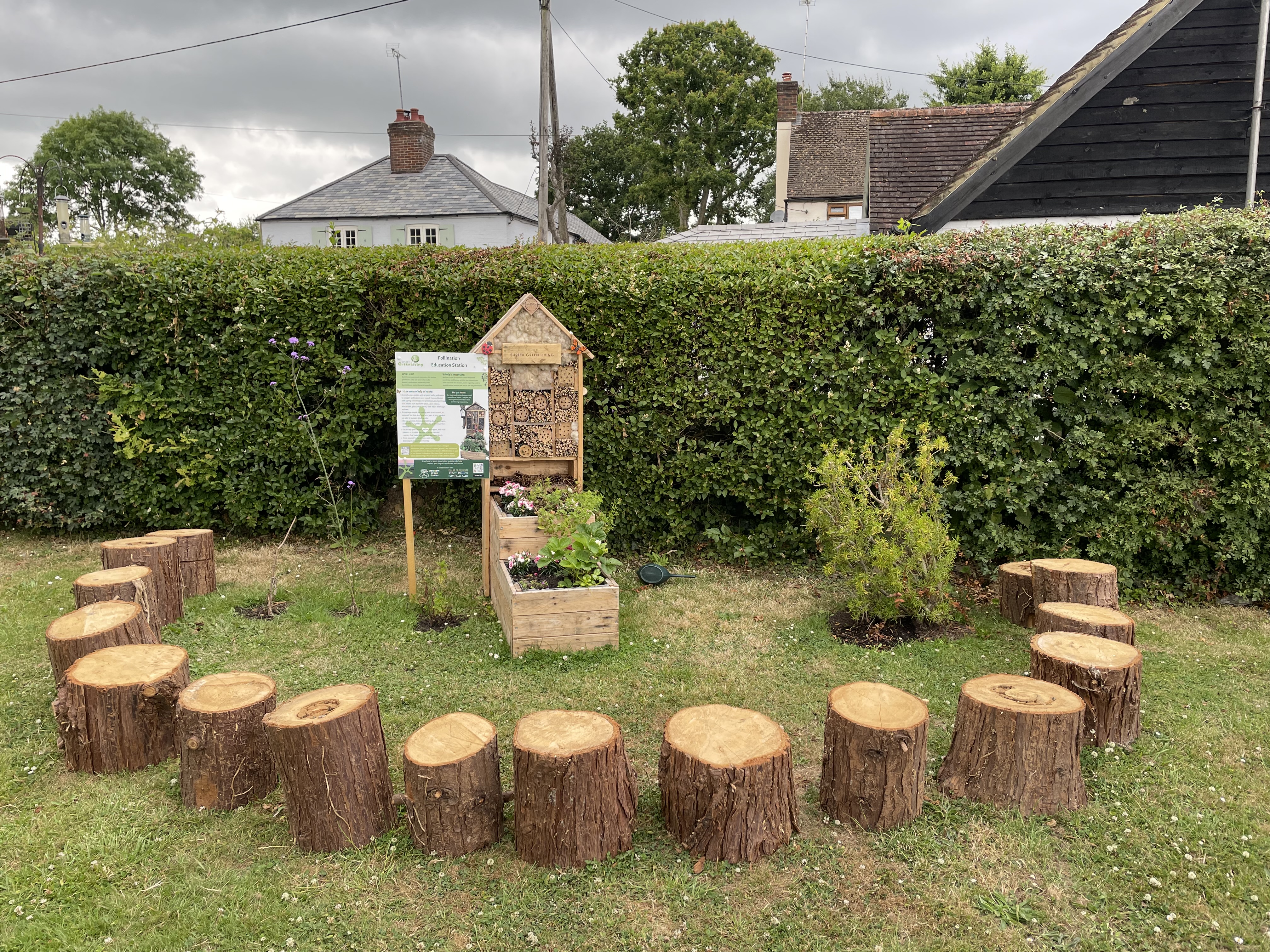
Each station combines planting, shelter and water to support pollinators such as bees, butterflies, beetles and moths – plus an A2 educational sign sharing action and signposting to the solutions page on our website. School or community installation events enable us to share knowledge, often through school assemblies and lessons.

PES installations act as living classrooms where learning and restoration go hand in hand. They help pupils see what works, what grows and what attracts insects. More importantly, they build confidence and curiosity, empowering young people to talk about biodiversity and act on it. The learning does not stop at school gates. Children take ideas home, helping to rewild gardens and influence family habits.

PES are not only installed in schools, we have several in other areas such as business parks, in church grounds, recreation grounds. They are installed with staff from businesses, young people in youth hubs, church congregation, with house builders we have installed them on new developments with homeowners and people from the local community. On the day, the project brings people together outside and gives a them an opportunity to be part of the positive impact. An efficient way to educate by doing.

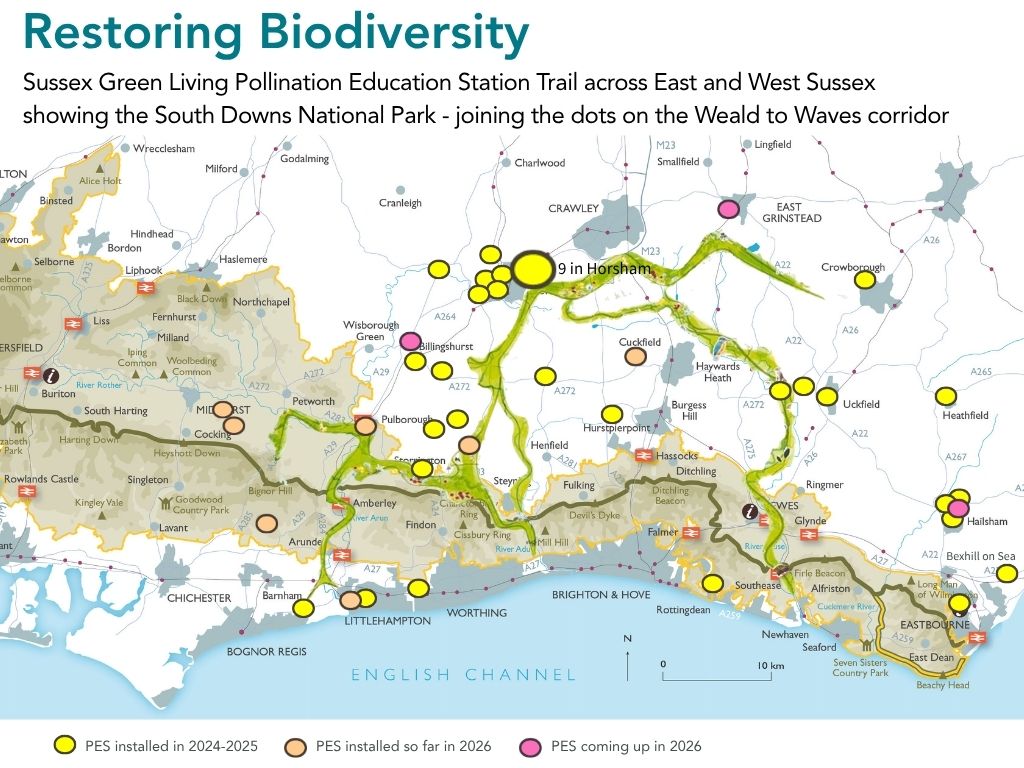
We now have 42 PES installed across East and West Sussex. Projects like the PES trail complement wider landscape-scale Re Naturing Sussex efforts such as Weald to Waves, the South Downs National Park, Sussex Bay, Sussex Wildlife Trust and more local to our HQ Knepp Estate, Horsham Green Spaces Wildways and Wilder Horsham District, showing how community-level engagement supports nature recovery across the county.

Each new installation adds another link in a growing chain of thriving habitats, helping people see that local choices contribute to a healthier, more connected environment.

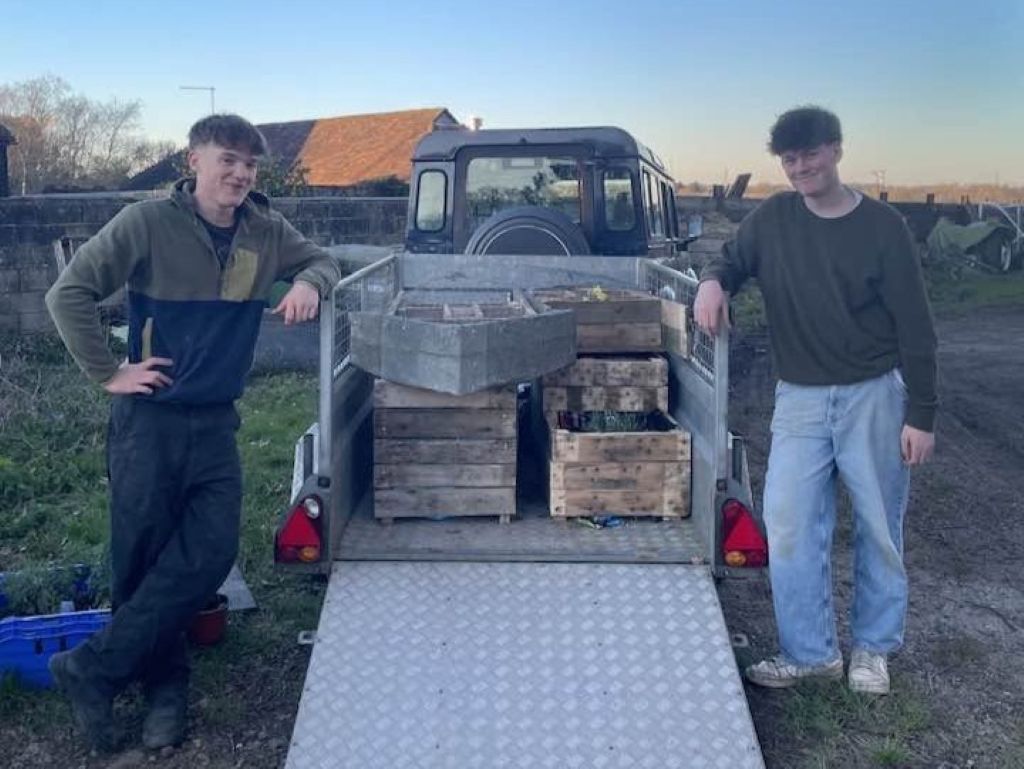
We are very grateful to Greenwood Plants in Yapton who generously donate plants for the PES every time. We also collaborate with Men’s Shed Horsham and Lily’s Cottage Upcycling who build the wooden structure of the PES and we love involving local youth group who also build the PES.

WE’RE LOOKING FOR SPONSORS AND LOCATIONS

Our environmental education charity is calling on businesses, pubs, councils, schools, groups, green space volunteers and individuals to find locations and sponsors to install Pollination Education Station (PES) so we can extend our Sussex Pollination Education Trail.

Contact us to learn about sponsoring a PES or initiating the project: marketing@sussexgreenliving.org.uk.
This is a MAXI, the bigger one of the two – H180cm x D130cm x W80cm

Costs: £600* includes soil, signs posts, A2 educational plaque, sponsored by sign and chicken wire, plus pollinator friendly plants – thanks to Greenwood Plants. 

* included delivery if within 10 miles of Billingshurst

You just need to go foraging for the materials for the bug hotel. Suggested foraged materials – fir cones, bark, bamboo, terracotta pots, roof tile or two, sheep’s wool, you could purchase a bee brick! 

Can be supplied with an integral hedgehog box. Price on application.
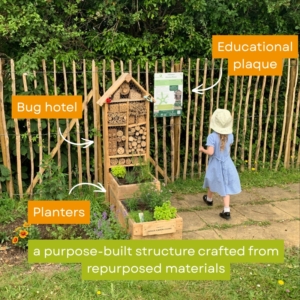
This is a MIDI, the smaller of the two Pollination Education Stations: H150cm x D105cm x W50cm

Costs: £500* includes soil, signs posts, A2 educational plaque, sponsored by sign and chicken wire, plus pollinator friendly plants – thanks to Greenwood Plants. 

* included delivery if within 10 miles of Billingshurst

You just need to go foraging for the materials for the bug hotel such as fir cones, bark, bamboo, terracotta pots, roof tile or two, sheep’s wool, you could purchase a bee brick!