
Sussex Green Living
  • Practical Solutions
  • Get involved
    • Our story & team
    • Schools
    • Businesses
    • Volunteering
    • Fundraising
    • Our vision
  • Sussex Green Hub
  • Horsham Repair Café
  • Events
  • News
  • Contact
  • Donate
  • Click to open the search input field Click to open the search input field Search
  • Menu Menu
  • Link to Facebook
  • Link to Instagram
  • Link to LinkedIn

Gardening to save the planet by Kia Trainor CPRE Sussex Director (first published in West Sussex County Times)
7 July 2021/in Biodiversity & Nature, Eco News, Ecology/by Marianne Lindfield

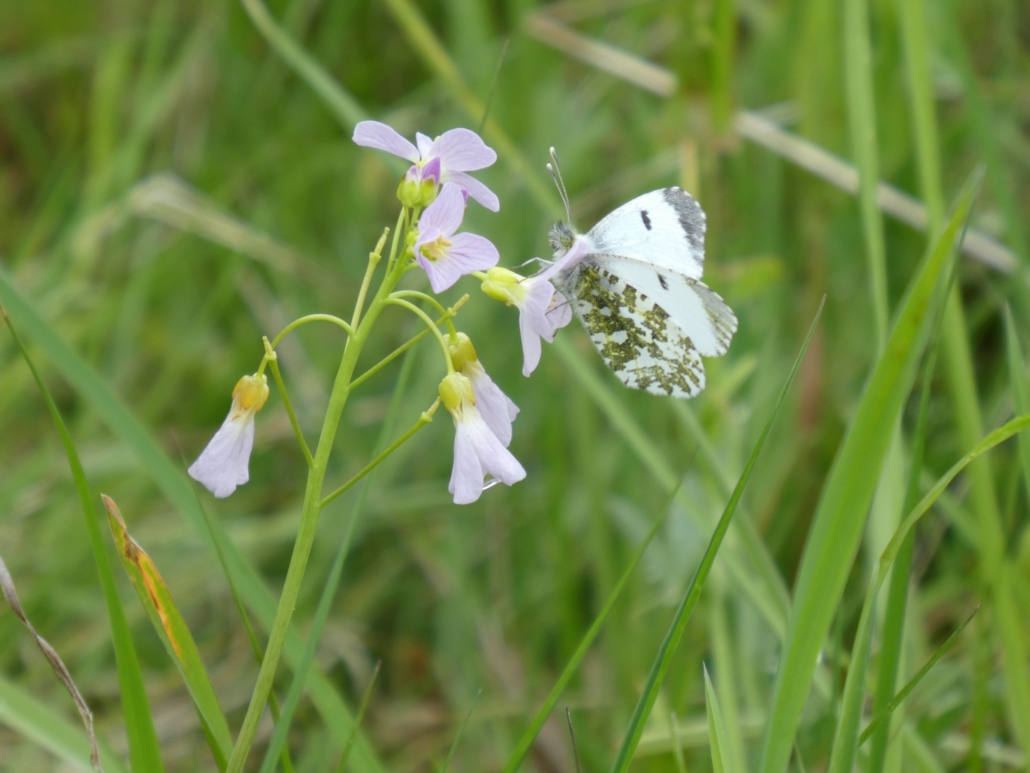
Female Orange tip

Dave Goulson is Professor of Biology at the University of Brighton. His books, include ‘The Garden Jungle’ and ‘Gardening for Bumblebees’.

At a recent talk, he explained that we need insects to pollinate our food crops.  In the UK some growers are now employing people to hand-pollinate their plants, because insect numbers have declined so dramatically.

We can help here though. The area of gardens across England is over 4.5 times that of national nature reserves, so by gardening for nature together we can make a difference.

As part of the CPRE Sussex ‘Festival of Spring’, Prof Goulson explained how we can garden to save the planet:

We can plant native wildflowers which attract most insects, such as bright blue Viper’s Bugloss and purple Greater Knapweed. Insects love Marjoram and we can enjoy eating it too. Garden flowers which insects favour include Catmint and Geranium Rozanne. Although the cultivated double varieties of flowers look pretty, they are not particularly insect friendly because butterflies and other insects can’t reach the nectar through the mass of petals.

A weed is only a plant in the wrong place!  If we change our attitudes and regard dandelions as little patches of sunshine – maybe in a wildlife corner – they can offer early spring food for many insects and a joyful splash of welcome colour in a dull corner.

We can save money as we protect wildlife by not spraying poisons, but letting predators control pests. Ladybirds and lacewings both feast on greenfly and other aphids, but pesticides kill all insects not just the ones we regard as “bad”. Pesticides also kill insects which provide food needed for many of the birds which we like to encourage into our gardens.

Cutting your lawn less often (and particularly not in May when flowers provide vital nectar for pollinators) or even better, leaving a patch altogether unmown, will enable wild flowers to flourish and provide a colourful display visited by butterflies, bees and other pollinators.

Worried that neighbours will think you are neglecting your garden? Just explain that you are gardening to save the planet and encourage them to do the same!

When we welcome nature into our gardens, we do make a difference.

Prof Dave Goulson encouraged us all to ‘Save a bee today: Save the planet tomorrow’… little and large at the same time…local and lasting.

CPRE Sussex, the countryside charity, works for a beautiful, thriving Sussex countryside for all to enjoy. Join CPRE Sussex/find out more at: www.cpresussex.org.uk and contact info@cpresussex.org.uk  for a link to Dave Goulson’s talk.

 

Tags: press_release
Share this entry
  • Share on Facebook
  • Share on X
  • Share on WhatsApp
  • Share on Pinterest
  • Share on LinkedIn
  • Share on Tumblr
  • Share on Reddit
  • Share by Mail
https://www.sussexgreenliving.org.uk/wp-content/uploads/2021/06/Female-Orange-Tip-butterfly-on-Cuckoo-Flower-scaled-1.jpg 1920 2560 Marianne Lindfield https://www.sussexgreenliving.org.uk/wp-content/uploads/2026/07/SGL-logo-masthead.png Marianne Lindfield2021-07-07 11:51:152021-07-07 11:51:15Gardening to save the planet by Kia Trainor CPRE Sussex Director (first published in West Sussex County Times)

Recent Blog Posts

  • People’s Emergency Briefing film 9 July 2026
  • Ready to make a world of difference?  9 July 2026
  • Citizen science helps dolphins thrive 23 June 2026
  • Communities and Churches Unite Around Climate Emergency Film 14 May 2026
  • A Pop-up with Purpose: Community Collaboration Brings Wellbeing & Sustainability To Horsham 5 May 2026

Search

Search Search

Blog Post Archive

Tag Cloud

beach clean bees biodiversity Cape of Good Hopes Cape of Hopes carbon climate change Community Event Community Project Crafting energy saving flowers food waste gardening green business network green thing grow-your-own homegrowing Horsham Eco Churches nature peat peat-free compost PES pollinators press_release Recycling refill refuse renature repair cafe reuse rubbish seed swap sheep spring sussex green hub sussex green living sussexgreenliving Sustainable Living United Reformed Church vegetables Wildflowers wildlife wildlife conservation wool

Sussex Green Living

The White House
Coolham Lane
Coneyhurst
RH14 9DH

Message Us

Latest Posts

  • People’s Emergency Briefing film9 July 2026 - 17:21
  • SGH Team
    Ready to make a world of difference? 9 July 2026 - 17:12
  • Citizen science helps dolphins thrive23 June 2026 - 14:32
  • Communities and Churches Unite Around Climate Emergency Film14 May 2026 - 11:08

e-Newsletter Sign-up

Get every post & our e-news to your inbox.

Subscribe Here

Search

Search Search
© Copyright - Sussex Green Living 2026 | Charity No. 1189569
  • Link to Facebook
  • Link to Instagram
  • Link to LinkedIn
Link to: Why we need to talk about homes after gas – through a Horsham eco open house trial Link to: Why we need to talk about homes after gas – through a Horsham eco open house trial Why we need to talk about homes after gas – through a Horsham eco open house... Link to: Lets visualise Horsham in 2030 together Link to: Lets visualise Horsham in 2030 together Lets visualise Horsham in 2030 together
Scroll to top Scroll to top Scroll to top

This site uses cookies. By continuing to browse the site, you are agreeing to our use of cookies.

OKLearn more×

Cookie and Privacy Settings


How we use cookies

We may request cookies to be set on your device. We use cookies to let us know when you visit our websites, how you interact with us, to enrich your user experience, and to customize your relationship with our website.

Click on the different category headings to find out more. You can also change some of your preferences. Note that blocking some types of cookies may impact your experience on our websites and the services we are able to offer.

Essential Website Cookies

These cookies are strictly necessary to provide you with services available through our website and to use some of its features.

Because these cookies are strictly necessary to deliver the website, refusing them will have impact how our site functions. You always can block or delete cookies by changing your browser settings and force blocking all cookies on this website. But this will always prompt you to accept/refuse cookies when revisiting our site.

We fully respect if you want to refuse cookies but to avoid asking you again and again kindly allow us to store a cookie for that. You are free to opt out any time or opt in for other cookies to get a better experience. If you refuse cookies we will remove all set cookies in our domain.

We provide you with a list of stored cookies on your computer in our domain so you can check what we stored. Due to security reasons we are not able to show or modify cookies from other domains. You can check these in your browser security settings.

Other external services

We also use different external services like Google Webfonts, Google Maps, and external Video providers. Since these providers may collect personal data like your IP address we allow you to block them here. Please be aware that this might heavily reduce the functionality and appearance of our site. Changes will take effect once you reload the page.

Google Webfont Settings:

Google Map Settings:

Google reCaptcha Settings:

Vimeo and Youtube video embeds:

Privacy Policy

You can read about our cookies and privacy settings in detail on our Privacy Policy Page.

Privacy Policy
Accept settingsHide notification only