
Climate Change hits Sussex as UK Declares First Red Extreme Heat Warning
 Soaring temperatures have left Sussex residents sweltering after an extreme heat warning raised the question whether this week has been the hottest on record in the region and what we should be doing to tackle climate change.
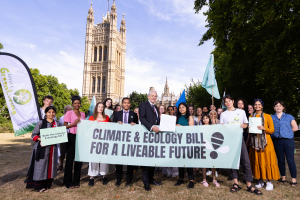
The national emergency came only a day after Sussex Green Living’s CEO Carrie Cort, her son and the charity’s Youth Eco Forum leader Tash Barns joined ‘Zero Hour’, a coalition of UK campaigners, world-leading scientists, academics and members of the public in Victoria Tower Garden next to the House of Lords in Westminster.
 I have been blessed to spend 20 years working in the Ecuadorian Amazon and Choco cloud forest, a world away from my home in Pulborough.
 Go Greener Rudgwick (GGR) is a group of local volunteers who meet regularly to sort single use plastics that can’t be recycled at home, but can be left in the Rudgwick Youth Centre recycling bins. We work in conjunction with Sussex Green Living in Horsham to sort and box items to be sent to Terracycle, a recycling company, to make into new products.
 Swifts have been thriving for about 70 million years, when they would have been nesting in crevices in rocks and trees alongside the last of the Tyrannosaurs. But despite millions of years, something has now gone dramatically wrong, and UK numbers have plummeted in the last 25 years.
 2022 marks 50 years since the conference which led to the designation of 5th June as World Environment Day. ‘Only One Earth’ was the motto for the 1972 Stockholm Conference and half a century later, do we doubt that this planet is our only home, whose finite resources are running out?
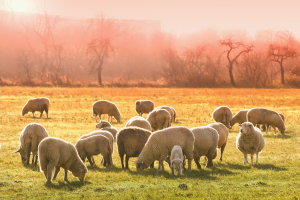 Don’t we all love to see spring lambs in wildflower meadows, and sheep in green fields?



 Community Wellbeing Garden
 Sussex Green Living
 Sussex Green Living
 Biffa
Biffa