• Renature with a Pollination Education Station

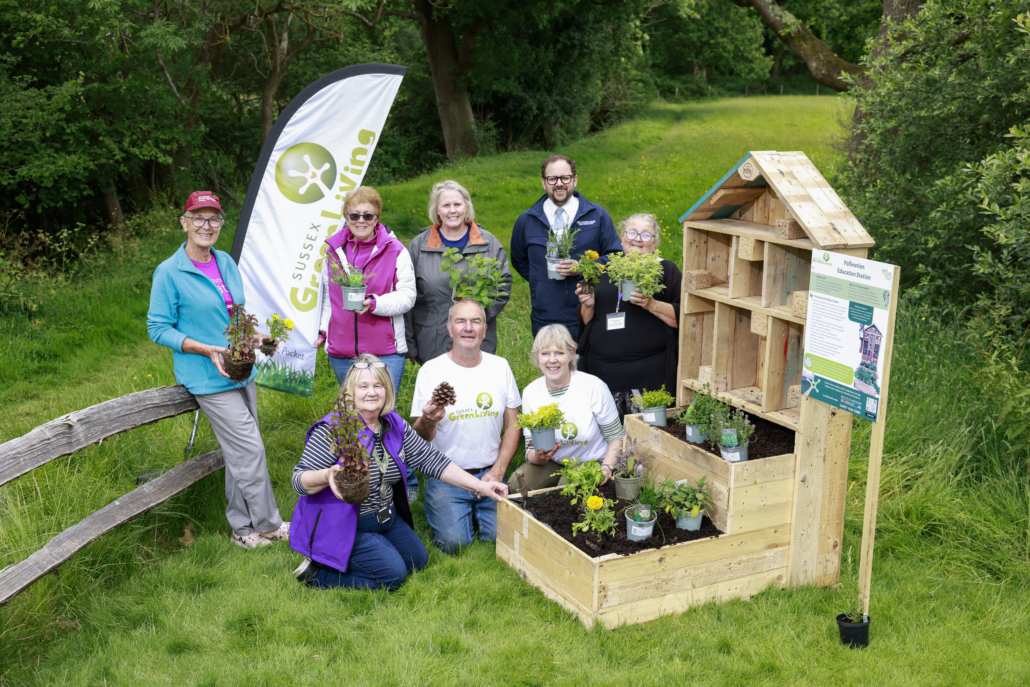
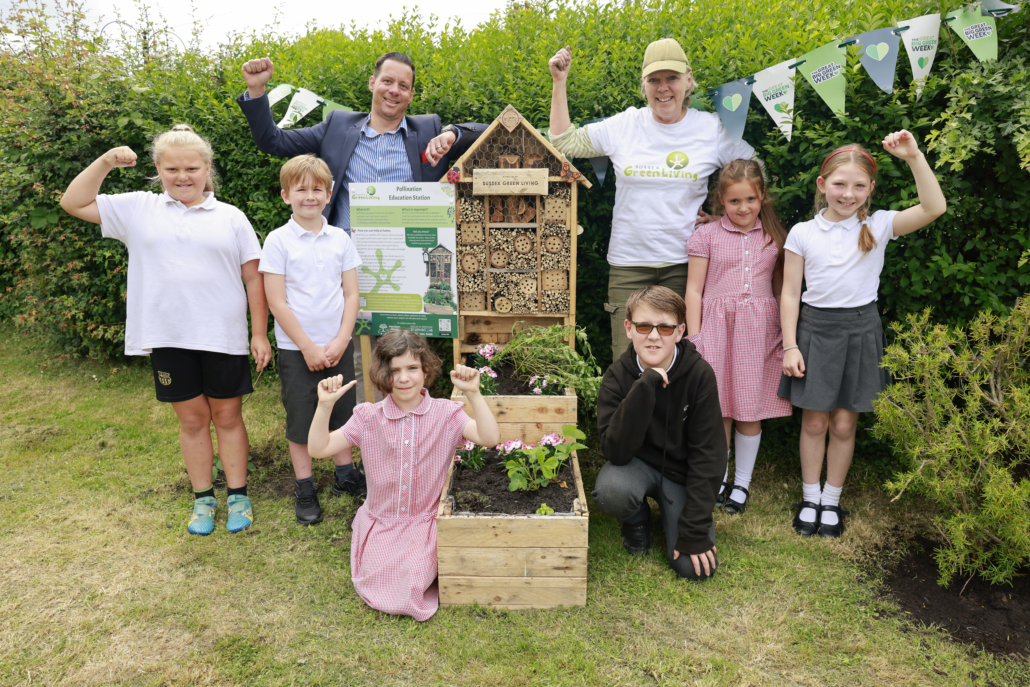
Carrie Cort with representatives from Lily's Cottage, with a pollination education station

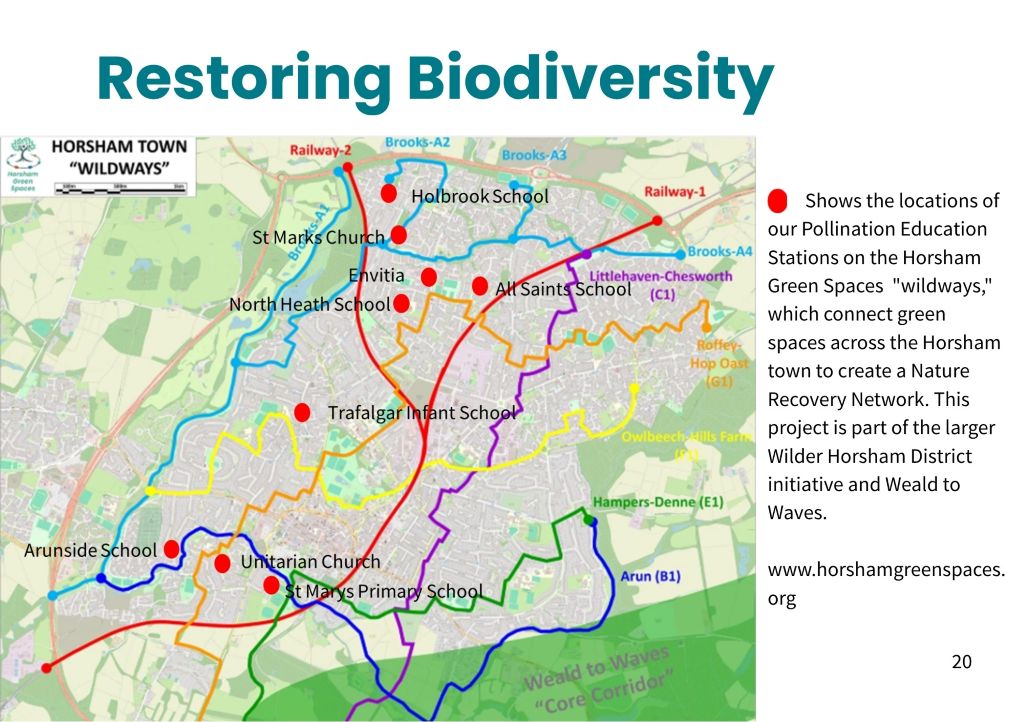
Horsham Green Spaces nature recovery map for Horsham. Click to view.

Renature with a Pollination Education Station 

Britain’s nature, a depleted oasis, relies on pollinators for every third mouthful we savour – the unsung heroes behind our food and thriving ecosystems. Human activity has transformed built-up areas like Sussex, demanding innovative conservation solutions.

Below you can learn what you can do to help nature in your garden and through shopping choices. However we are really excited to share our exciting renature project which we launched in March 2024 – cue our Pollination Education Stations (PES).

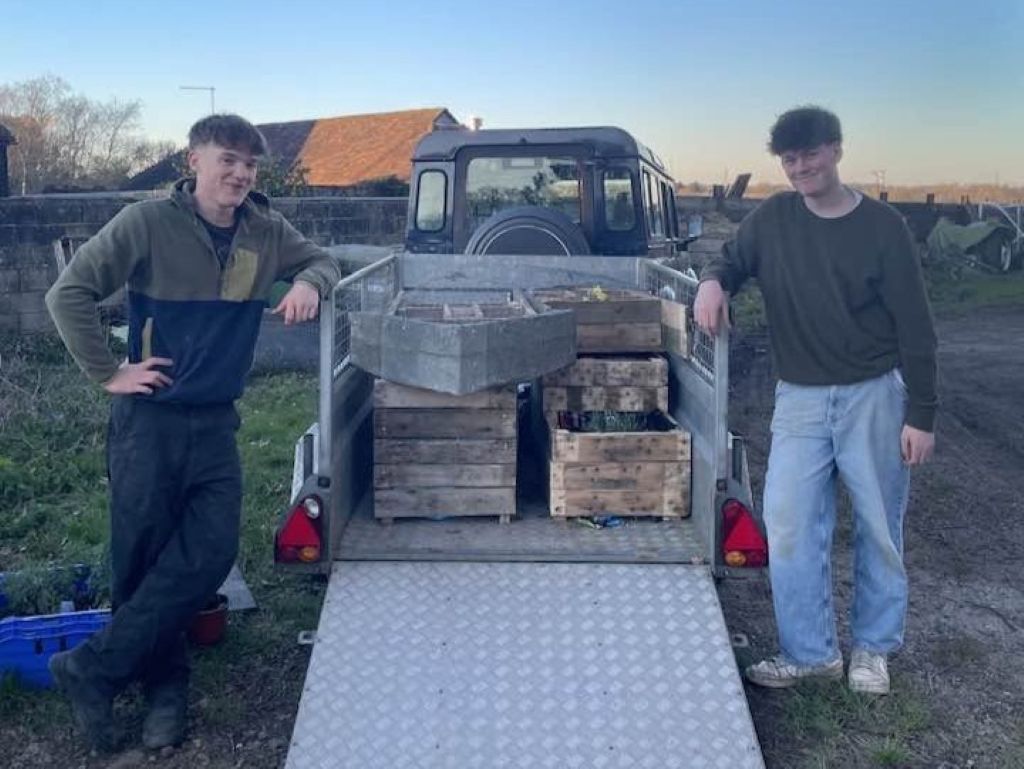
Our goal is to create a PES Trail across Sussex to boost biodiversity and amplify awareness of ongoing environmental initiatives. Our PES Trail will help connect our fragmented landscape, provide habitats for pollinators, nectar and pollen and herbs for the local community. This project supports the aims of the Weald to Waves network who are forming a 100 mile nature recovery corridor in Sussex. South Downs National Park Bee Line project and Horsham Green Spaces in Horsham town their exciting new urban recovery Wildways Project. Our PES have been lovingly made with repurposed pallet wood by Lily Cottage Upcycling, Horsham Men’s Shed, Slinfold Community Shed, our youth group and staff from Mountjoy as part of their corporate volunteering. All working together to help join up the dots.

Together, let’s nurture our ecosystems and celebrate the essential role of pollinators.

What is a Pollination Education Station?
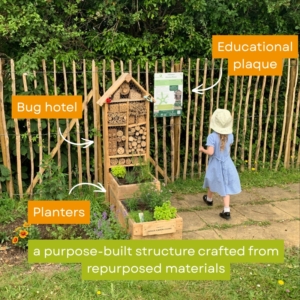
A purpose-built structure crafted from repurposed materials, provides a safe, eco-luxury haven for our essential winged friends. Each station includes an educational plaque, fostering awareness and action everyone can take in their gardens and community.

How Can You Help?
Join businesses, pubs, councils, schools, groups, and individuals across Sussex:

Purchase and install a Pollinator Education Station on your property.
Sponsor a local school to host a station on their grounds.

Businesses – we are offering these Pollination Education Stations as part of our Green Business Network – learn more here.

Some communities may choose to make their own Pollination Education Station or ask their local Men’s or Community Shed to make one, that’s great, but please do contact us about adding your Pollination Education Station to our trail and the Weald to Waves map. We ask that you add one of our A2 recycled foamex educational plaques to your ‘station’, this provides ideas for action people can take in their gardens or community and directs them to our site to learn about solutions to the climate and nature crisis. We can add different logo to reflect the maker/sponsor/local environmental group. Please contact us to learn more.

PES Locations and Sponsors 2024/2025 

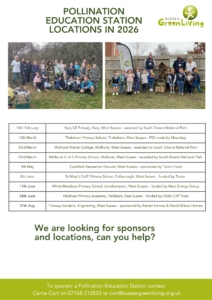
The posters below show all the locations we installed Pollination Education Stations in 2024 and 2025 and their sponsors. We are now looking for sponsors and locations for 2026. Contact us if you would like to get involved.

What Does it Cost?
You can choose from two sizes and two different packages depending on whether you would like us to supply an ‘off the shelf’ pre- stuffed and planted Pollination Education Station or one which your community can forage, stuff and plant as part of a community team building event. See the flyer below for prices and options.

You can learn about our wider Green Business Network package here.

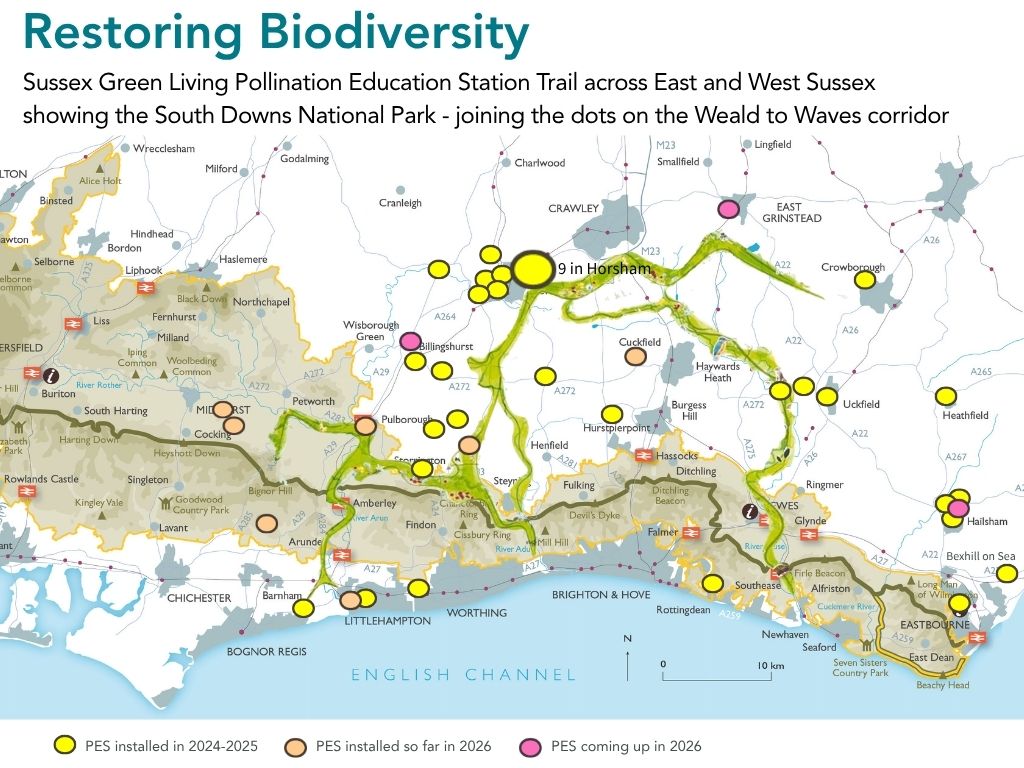
Pollination Education Station Trail Map with Weal to Wave Corridor

The map shows where we installed Pollination Education Stations, coinciding with the Weald to Waves corridor

Pollination Education Station Educational Plaque

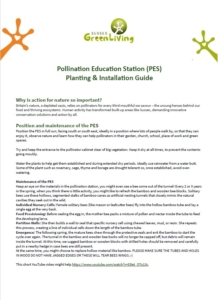
Each PES comes with this A2 educational plaque, explaining why they are important, what you can do for nature and signposting to solutions. This is the Horsham District version, a different version will be available for PES in other areas, download this flyer

Pollinator friendly planting guide, download here

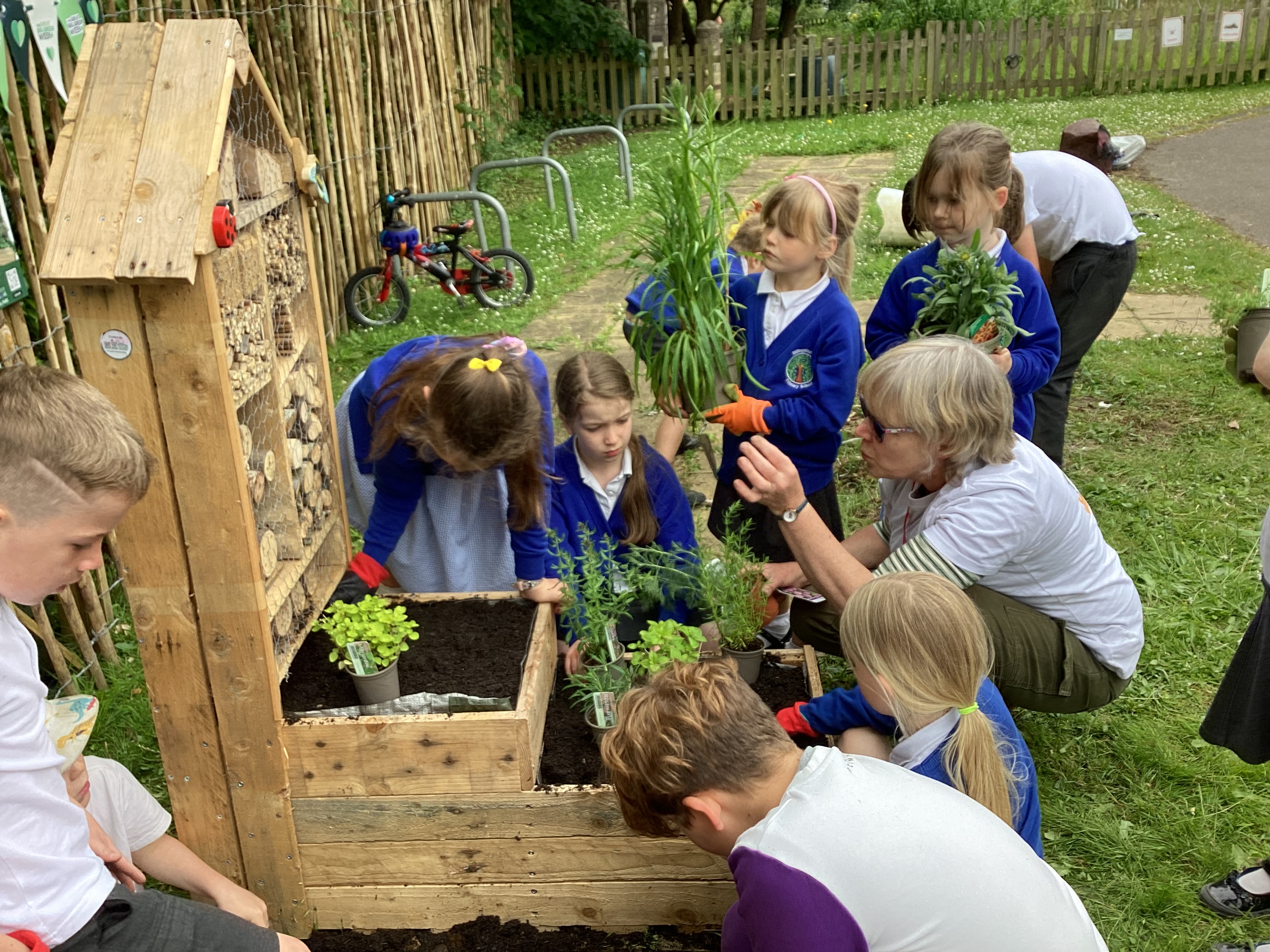
Pollination Education Station (PES) installed at William Penn

This is a MIDI sized PES installed with an educational plaque in the William Penn Primary School

Pollination Education Station (PES) installed at Ecclesden Park

This is a MAXI sized PES installed with an educational plaque in Ecclesden Park with the David Wilson Homes team.

Read on to learn other ways you can help people and nature to thrive in your garden

No chemicals

Keep plastics and damaging chemicals out of your garden

Try and keep single-use plastics, peat based products and artificial chemical fertilisers out of your garden.  There are plenty of alternatives!

  • Refuse chemical fertilisers and make your own compost and mulch, and garden in harmony with the seasons.
  • Refuse chemical non-natural pesticides. There are plenty of alternatives, such as nematodes for slugs and weevils, grease bands for fruit trees, rubber collars for strawberries, companion planting, and even live insects such as ladybirds to eat aphids.
  • Refuse plastic plant pots wherever possible, especially the black ones.  There are plenty of alternative fibre, ViPot (rice hulls) and bamboo pots available now.  Coir is biodegradable, but has a high carbon footprint.  If you’re sowing from seed, why not make your own out of cardboard cut in a cross and then tie the sides together in a square with twine?
  • Growing from seed or buying bare-root shrubs and trees is the best way of avoiding plastic pots. Buy local where possible.
  • Refuse feed and treatment bottles. You can make your own liquid feeds from manure, kitchen veg scraps, seaweed, comfrey and garden weeds, and much more.  If you have to buy, make sure it’s in a cardboard box.
  • Bulky buys in large plastic bags should be avoided by making your own mulch or compost or getting a lorryload, but you can recycle some bags, or re-use them for rubbish or as growing bags if you wash them first.
  • A lot of plastic sheeting is used for protection and insulation.  Try using cardboard or straw or sheep’s wool instead.

Want to know more? The RHS has a great page on plastic-free gardening.

Grow Sustainably

Grow sustainably

  • Home-grown Fruit, salad, herbs and vegetables reduce food miles and your carbon footprint
  • Grow seasonally and for the local soils
  • Grow from seed in your own second hand or non plastic pots
  • Even with a small space, grow plants up a wall, or in containers, or in a shelved system
  • Spread out your planning season by planting across a number of days or weeks. Or plant perennials and pick the tips , or let them self-seed.
  • Plant in layers, such as herbs under tomatoes, to make the most of your space
  • Join your local gardening club for seed swaps and local advice
  • Build a wormery to recycle garden waste
  • Grow things that you can use: as pot pourri, pickles, jams, even back scratchers.
recycle in the garden

Recycle

  • You should compost as much of your garden and kitchen waste as possible.  If you need to use a local recycling scheme, make sure you put garden waste into your council kerbside green garden bin or take it to your local recycling centre where it will be turned into compost.  There are plenty of excellent sites on composting, including our own page and you can use old pallets or wood crates to start.
  • Don’t throw it away! Old plastic can be used for polytunnels, and cardboard makes an excellent weed suppressant.
  • Old pallets, wheelbarrows, wine crates, anything that can hold soil, can make for a layered garden
  • Re-use any black plastic that you’ve got, but do wash it thoroughly first.
  • Grow micro greens in plastic bottles, egg trays, eggshells, the list is endless.
Biodiversity

Encourage biodiversity

  • Plant for bees, butterflies and wildlife
  • Don’t mow your lawn!  Many weeds such as dandelions provide valuable nectar rich food for insects.
  • Provide wildlife cover and habitats
  • Make a pond! Event a small recycled container can be valuable for biodiversity.
  • Grow for a long season: plant pollinators for early Spring, and berries for Autumn food.
  • Upcycle plastic containers as bird feeders, water baths, seed trays and much more
  • provide shelter and nesting sites for birds, bees and other pollinators as well as hedgehogs.  And create wildlife corridors between gardens by using steps or leaving areas of cover or wildness.

The RHS has a great site on wildlife gardening.

Use of natural resources

Use your resources well

  • Plant native, local species in the right location
  • Add organic matter such as home-made compost to help the soil hold water and add nutrition
  • Harvest rainwater with water butts or metal buckets
  • Only water when necessary and in the early morning or evening
  • Select species that can tolerate dry spells
  • Leave grass clippings on the lawn as a mulch
  • Use a rake or a lawnmower to collect and shred leaves and keep them in recycled bags to rot down as mulch. Then spread it on your beds to reduce water loss.