
 On Saturday 2nd May Dr Tony Whitbread spoke at the Horsham Climate Cafe to around 100 people using Zoom video conferencing. He spoke about positive impacts of covid on human attitute to nature and signs of the natural world recovering. This event was chaired and facilitated by Helen Whittington, Carrie Cort, Chloe Harrison and Vivaine Doussy. You can hear a podcast of his talk, see the global reach of this event and the Q&A here.
Tony shares his thought provoking insight with us here…..Nature seems to be blossoming while us humans are locked up indoors. We’ve heard about goats taking over gardens in Llandudno in Wales and fallow dear wandering round parts of London. There are elephants on the streets of Thailand, elephant seals in Argentinian suburbs and the penguins are taking back the streets in South Africa! There seem to be more butterflies and the birds seem to be singing louder. Is nature really recovering while we are locked up, is it the good weather, or is it just that we are taking the time to pay attention and notice what has been there all along?
Maybe it’s all three, but COVID-19 has made us press the pause button. Like naughty teenagers, we have been sent into our rooms to think about what we have done for the last few decades! Maybe we will behave better when we are let out.
But it does seem to be true that all sorts of people are noticing nature. Whether simply looking out of the window, taking the time on an exercise walk or cycle or doing garden bird surveys with the Wildlife Trust, people are taking the time to absorb the natural world around them. Michael Blencowe’s excellent daily nature diary on the Sussex Wildlife Trust web site is also proving incredibly popular, showing that people really want to engage with the natural world.
Moreover, we are noticing that the sky really is clearer, with less air pollution and the absence of vapour trails from planes. Around the world air quality has improved in cities; often markedly so. In China, the reduction of deaths caused by air pollution is greater than the increase in deaths from coronavirus. In Britain we are racing towards 40,000 coronavirus deaths – but we lose 40,000 people a year to air pollution!
Ironically, the reduction in air pollution may actually increase global temperatures, even though greenhouse gases have gone down. Particulate air pollution (as well as killing people) reflects sunlight so reducing temperatures. If pollution goes down, then temperatures may go up.
The message that human activity must inevitably be bad for the environment is, however, rather a negative one. Whilst this might be generally true, it is not always the case by a long way. Conservation management, sensitive farming, sustainable forestry as well as gardening and looking after community green spaces are all positive interactions. If nature is being left alone, aren’t we just rewilding? Well no; rewilding is the positive rebuilding of natural systems and then encouraging it to look after itself – it is not the same as abandonment! Furthermore,
However, we should not have to wait for a pandemic for nature to be able to recover!
Many people are therefore questioning our relationship with nature at quite a deep level. We may get over the virus, but the climate and ecological emergency is still with us.
We are at the beginning of the 6th mass extinction. And this one is caused by our own actions. And let us be clear – extinction is not only something that happens to other species! 10 years ago it was only weirdos who talked about human society collapsing and possible human extinction. Now it’s a common concern, indeed the younger generation is beginning to see little else in their future.
If we look at some of the recent loss statistics, we get an idea of the scale of our problem:
The 2018 World Wide Fund for nature living planet report showed that there has been a 60% reduction in populations of vertebrates since 1970s and a study in German nature reserves showed a 75% reduction in insects in just 30 years
I also remember David Attenborough telling us that currently around 96% of mammals are either humans or our livestock. Only 4% is everything else (elephants, rabbits, mice, badgers, etc – only 4%!)
I cannot help but conclude that we’ve lost more than half of the vibrancy of nature within my lifetime.
Against this, one myth that we have to bust is that nature is just for nature lovers and that looking after the environment is only some form of favour to environmentalists – a nice to have. Pandemics are one symptom of the collapse of our ecosystems, and these ecosystems are our life support system. No life support system – no life!
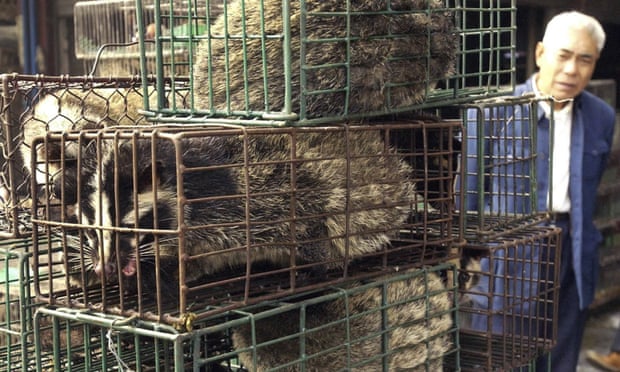 As we’ve pushed nature into its last corners, whether in animal markets, in industrial farms or by destroying ecosystems, these diseases are increasingly able to cross the species barrier and infect us. It is estimated that between 2 and 4 new viruses appear every year because of this.
So some epidemiologists are now saying that the last 20 years have been 20 years of near-misses – pandemics are becoming more likely and we may not be so ‘lucky’ next time. Pandemics are a repercussion of our destruction of nature and they may now become a long-term feature of our lives – unless we change our ways.
The bigger question, therefore, is not how is nature recovering now but how can nature continue to recover after we come out of lockdown?
So, when we get into the new normal, our relationship with nature must be different. The past was exploitative, the future must be regenerative. What does this mean in practice? Well that is not a question that will be answered by simple take-home messages – it is the challenge to humanity for the foreseeable future.
But at the centre of this must be a change in our values. We must move away from the old normal of consumerism, me-first, competitiveness, demanding never-ending material growth (on a finite and degrading planet), treating animals, plants and ecosystems as commodities to be exploited rather than assets to be cared for.
The virus has brought out the higher values in many of us – that of society, empathy, helping and sharing. Importantly it has also brought out a desire to look after the vital assets that we all have, and we all hold in common – nature.
Our actions now must be regenerative of nature, of soils and of society. We need a carbon neutral, zero waste society. And delivering this, very likely means a significant growth in localism. We will become closer to our local place and to our local wildlife.
So, what is the good news? The pause button has been pressed. We have been sent to our rooms to think about our behaviour over the last decades and we’ve started to realise what is important to us – people, society, empathy, sympathy and sharing, and also care of the things we all hold dear and rely on – nature. Against this, the never-ending impossible drive to more wealth seems rather immature. Perhaps we are leaving the mindset of the spoilt brat economy behind us.
We go back to Business as Usual at our peril.
To end I would like to go back to the African penguin I mentioned at the beginning.
The African penguin may be taking back the streets of South Africa, but their population is in trouble – they are in decline (from Philip Lymbery’s book “Dead Zone”). The reason for their decline is that the fish they eat has been extracted from the sea by an industrial fishing fleet (powered by fossil fuels). These fish are then ground up into fishmeal and fed to animals, such as chickens, in highly intensive industrial farms. These farms often have thousands of animals packed-in tightly together, in highly unhygienic conditions, forming the ideal breeding ground for diseases. These diseases could well include new viruses which could cross the species barrier and become our next pandemic. Species decline, ecosystem destruction, fossil fuel use (and climate change), animal welfare and human health are therefore not separate issues, they are entirely inter-connected. I repeat, we go back to the old normal at our peril!

You can hear a podcast of Tony’s talk, see the global reach of this event and read the Q&A here.
You can read Tony’s blog here.
Written by Dr Tony Whitbread, President of Sussex Wildlife Trust.


Feeling inspired to get involved?
We are always looking for volunteers, so get in touch or come and meet us and see how you can get involved! Join us on Facebook, Twitter and Instagram, or sign up to receive our latest news (it only takes two seconds to add your email address – simply click on black ‘Follow‘ tab on bottom right of this screen!). Feel free to also send us an email using our contact form, or come and say hello at our events like the Horsham Climate Cafe or the Horsham Repair Cafe!