
Sussex is Really Buzzing
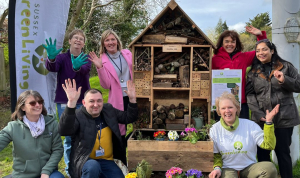 Getting Sussex Buzzing again!
Sussex is really buzzing in 2024 thanks to exciting new collaborations between Sussex Green Living and local businesses: a new way of combining practical solutions to current and future environmental issues with community outreach, fundraising and business wellbeing. The Pollination Education Stations and Green Business Network have been developed in collaboration with Billingshurst based agency PMW Communications as part of their generous gift of pro bono work with 30 local charities to celebrate their 30 years in business.
One week after Sussex Green Living launched these new endeavours at the Sussex Green Hub, the first Pollination Education Station (PES) has been installed. Horsham based business, Envitia Ltd, a digital and data services company based in Horsham, will focus on one charity each quarter and on Monday 4th March, as part of their fundraising and collaboration with Sussex Green Living, they set up their Pollination Education Station, a haven for pollinators, with a community herb bed and an information board.
 From the Path to the Shop: Natural community food production. With all the worry about climate change and food production, it feels important to get to know one another to develop good practices for improving soil fertility and the production of local organic food.
 We are all aware of the urgent need to protect our nature which has been depleting at a rapid rate. If you want to make some changes at home to protect nature, boosting the biodiversity in your garden or outdoor space is a great place to start.
 We all want a world where our climate is stable, nature thrives, and where all people have health, happiness, and prosperity – it’s our human right, right?
 Clive Cobie
 As a child, I never understood the saying, “It’s an ill wind indeed that blows no good,” but I recently realised that’s what’s happening now.
 Did anyone see the coverage of the Earthshot awards presented by the Prince of Wales in Boston earlier this month? They were awards given to organisations, companies or cities recognised as making a significant contribution to dealing with climate change, reviving our oceans, and other similar objectives. You can watch the whole ceremony on
 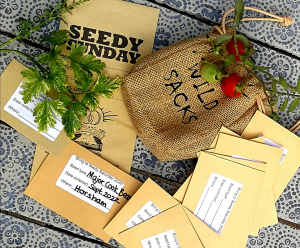 Did you know that farming more in harmony with nature can not only replenish the soil (without the need for manufacturing and transporting factory-made chemicals long distances in plastic bags) but can also produce crops throughout the year because different foods can be grown together, in the same way as they are on an allotment?
 Community Wellbeing Garden
 Sussex Green Living
 Sussex Green Living
 Biffa
Biffa