Although we are a tiny country, of all the countries in the world, only the massive USA is worse than us in terms of wasting clothes!
Even cheap fashion has a secret cost, and it’s a surprisingly big cost if we consider how and where clothes are manufactured, by whom, how they’re transported here, how many times they’re worn, and where in the world they are taken before being dumped or burned!Read more
https://www.sussexgreenliving.org.uk/wp-content/uploads/2026/09/HRC-textile.jpg8001200Elisabethhttps://www.sussexgreenliving.org.uk/wp-content/uploads/2026/07/SGL-logo-masthead.pngElisabeth2026-09-29 11:51:182026-09-29 11:51:54Second Hand September – First Choice is Second-Hand!
Sussex Green Living is appealing to the public to keep going with a plastic free life in 2026 and beyond.
Why is recycling plastic not enough? While some of the plastic we recycle is turned into new products, much of it is exported or incinerated. Although energy recovery from burning plastic is often counted within waste management, plastic is made from fossil fuels that took millions of years to form, so burning it is not a sustainable solution. The biggest climate impact, however, comes long before plastic reaches us. According to the OECD, around 90% of greenhouse gas emissions from plastics occur during production and manufacturing. Read more
https://www.sussexgreenliving.org.uk/wp-content/uploads/2026/09/reusable-cups-scaled.jpeg17092560Elisabethhttps://www.sussexgreenliving.org.uk/wp-content/uploads/2026/07/SGL-logo-masthead.pngElisabeth2026-09-08 11:23:302026-09-08 11:26:45Going Beyond Recycling Towards Less Plastic
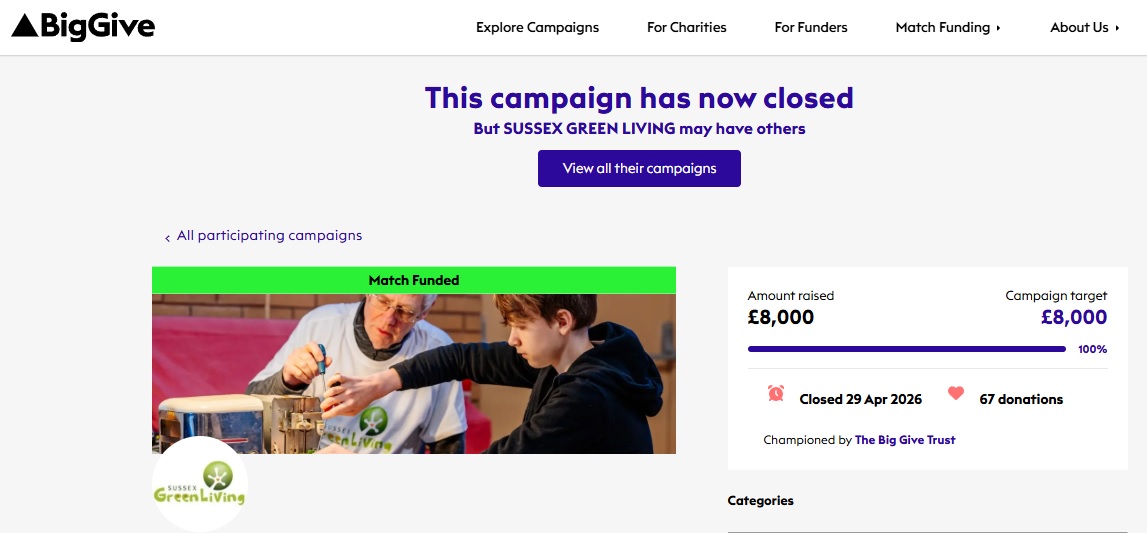
Following a competitive application process, Sussex Green Living has been selected to take part in the Big Give Earth Raise—a national match-funding campaign launching on Earth Day 22 April.
From noon Wednesday 22 April to noon Wednesday 29 April every donation made through the campaign will be matched, meaning a £50 donation becomes £100 to support the charity’s work across Sussex.
Run by Big Give, the campaign brings together philanthropists, foundations, and businesses to match public donations. Over the years, Big Give has raised approximately £427 million for thousands of charities. NOTE: 30th April – WE ACHIEVED OUR TARGET!
https://www.sussexgreenliving.org.uk/wp-content/uploads/2026/08/big-give.jpg5331147Marianne Lindfieldhttps://www.sussexgreenliving.org.uk/wp-content/uploads/2026/07/SGL-logo-masthead.pngMarianne Lindfield2026-04-16 09:30:162026-08-03 14:29:30Donations set to double in national campaign
Across Sussex, people are proving that repair is not a thing of the past but part of the future we need to build. From Storrington to Horsham, Lewes to Brighton, Repair Cafés show what a circular economy looks like in everyday life: people coming together to fix broken things, share knowledge and stop waste before it starts.
Last weekend marked International Repair Day, but for the volunteers and visitors at Repair Cafés across Sussex, repair is not just a day, it is a habit that keeps growing. These monthly meet-ups are practical and sociable. A kettle, a radio or a pair of trousers comes in broken and often goes home working again. What stays behind is something less tangible but just as valuable: connection, confidence and community.
In a small workshop in Haywards Heath, cricket bats are being restored to life. Barney Morris, better known as Barney Bats, repairs around 50 damaged bats each week. After a busy weekend of matches, his workbench can resemble a triage unit as bats arrive in need of care and attention.
Morris, who runs the cricket department at Wisdom Sports in town, is on a mission to prove that a cracked bat need not be discarded. His passion began when he started fixing senior bats for junior players, driven by the high cost of new kit. “The price of cricket bat willow means getting a good bat is really expensive,” he explained. “Now I get donated adult bats which I can repair and resize for children and I can sell them at a fraction of the cost of a new bat.” Read more
https://www.sussexgreenliving.org.uk/wp-content/uploads/2025/07/cricket.avif427640Marianne Lindfieldhttps://www.sussexgreenliving.org.uk/wp-content/uploads/2026/07/SGL-logo-masthead.pngMarianne Lindfield2025-07-29 17:26:072026-08-04 17:11:18Batting for Change: Repair and Reuse Take Root in Local Cricket
Across West Sussex, more and more communities are finding simple ways to cut waste and make the most of what they already have. Whether it’s fixing broken items, passing on unwanted goods or switching to refillable options, people are discovering that small changes can make a big difference.
At Sussex Green Living, we’re working to promote practical solutions like these through our support for repair cafés, new refill initiatives and by sharing inspiring stories from across the county. One group that really caught our attention is based just outside Worthing, where bicycles are getting a new lease of life, along with the people who ride them.
New life for recycled bikes
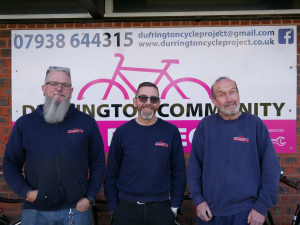
What do you do with an unwanted bicycle? Down here on the coast, we contacted Durrington Community Cycle Project (DCCP), who are tired of seeing bikes end up in landfill. Instead, they show customers how to repair their bikes and keep them cycling safely. What’s more, they’ve integrated the whole repair and reuse ethos into the heart of their local community.
https://www.sussexgreenliving.org.uk/wp-content/uploads/2025/07/repair-to-refill.jpg225300Marianne Lindfieldhttps://www.sussexgreenliving.org.uk/wp-content/uploads/2026/07/SGL-logo-masthead.pngMarianne Lindfield2025-07-01 12:17:062026-08-04 17:14:29From Repair to Refill: Local Projects Rethink Waste and Rebuild Community
You know that big bag of old clothes you dropped off at the charity shop after having a wardrobe declutter? You probably felt a warm glow of generosity by donating your unwanted bits to a good cause (and it’s probably also a relief to get all that clutter out of sight by conveniently handing it all over to someone else, right?). What if I told you that only between 10% and 30% of second-hand donations are resold in store. What happens to all the rest?
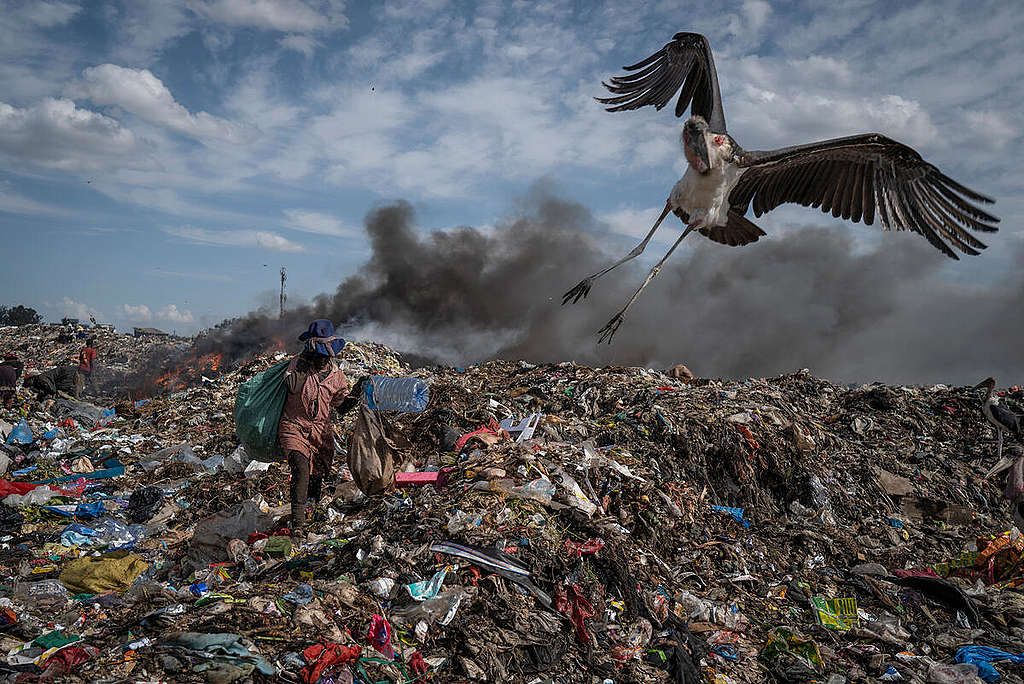
The clothes that charity shops can’t sell are taken away and in the UK, 70% of used clothing is exported to the Global South. Once there, many clothes end up in landfills or incinerated. This has major impacts on health and the environment, including water pollution and greenhouse gas emissions, worsening the strain on countries already struggling with waste management infrastructure. Read more
https://www.sussexgreenliving.org.uk/wp-content/uploads/2025/03/textile-mountain-1.jpg6841024Carrie Corthttps://www.sussexgreenliving.org.uk/wp-content/uploads/2026/07/SGL-logo-masthead.pngCarrie Cort2025-03-13 15:03:182026-08-04 18:43:37From Donation to Dump: The Environmental Cost of Charity Shop Surplus
From 10am-4pm on Saturday 26th April, Horsham will come alive to celebrate green living in Sussex – perfect for mums, dads, and little ones alike. It’s a day packed with local food, expert talks and eco-friendly fun that will inspire you and your family to live more sustainably. Spread across four unique venues in central Horsham, come along for a day of free goodies, family-friendly activities, and caring community vibes at the Plant to Plate Festival! Read more
https://www.sussexgreenliving.org.uk/wp-content/uploads/2025/02/P2P-2.jpg7201280Carrie Corthttps://www.sussexgreenliving.org.uk/wp-content/uploads/2026/07/SGL-logo-masthead.pngCarrie Cort2025-02-06 21:36:362026-08-04 18:34:11Exciting new family friendly event in Horsham
I can feel a new wave of environmental awareness amongst the communities around us, uniting and supporting each other to reduce our impact on the planet.
It is easy to focus on finances and ignore the climate just now, when the cost-of-living crisis is hitting us so hard. However, the two are fundamentally interlinked. Reassessing how we live and what we consume ultimately saves resources for our planet and puts money into our pockets too.
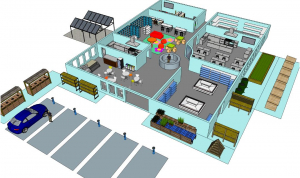
For 2023 we want to build on the success of our monthly pop-up Sussex Green Hub by establishing a Community Climate Hub ‘on the high street’ in Horsham. The purpose of the hub is to offer initiatives and education that allow everyone to make changes to their life that have a positive impact on the planet AND save them money!
https://www.sussexgreenliving.org.uk/wp-content/uploads/2023/02/Horsham-Community-Climate-Hub-Plan-2023-300x178-1.jpg178300Marianne Lindfieldhttps://www.sussexgreenliving.org.uk/wp-content/uploads/2026/07/SGL-logo-masthead.pngMarianne Lindfield2023-02-02 07:52:102026-08-10 15:03:13Philanthropists and business heroes needed
We may request cookies to be set on your device. We use cookies to let us know when you visit our websites, how you interact with us, to enrich your user experience, and to customize your relationship with our website.
Click on the different category headings to find out more. You can also change some of your preferences. Note that blocking some types of cookies may impact your experience on our websites and the services we are able to offer.
Essential Website Cookies
These cookies are strictly necessary to provide you with services available through our website and to use some of its features.
Because these cookies are strictly necessary to deliver the website, refusing them will have impact how our site functions. You always can block or delete cookies by changing your browser settings and force blocking all cookies on this website. But this will always prompt you to accept/refuse cookies when revisiting our site.
We fully respect if you want to refuse cookies but to avoid asking you again and again kindly allow us to store a cookie for that. You are free to opt out any time or opt in for other cookies to get a better experience. If you refuse cookies we will remove all set cookies in our domain.
We provide you with a list of stored cookies on your computer in our domain so you can check what we stored. Due to security reasons we are not able to show or modify cookies from other domains. You can check these in your browser security settings.
Other external services
We also use different external services like Google Webfonts, Google Maps, and external Video providers. Since these providers may collect personal data like your IP address we allow you to block them here. Please be aware that this might heavily reduce the functionality and appearance of our site. Changes will take effect once you reload the page.
Google Webfont Settings:
Google Map Settings:
Google reCaptcha Settings:
Vimeo and Youtube video embeds:
Privacy Policy
You can read about our cookies and privacy settings in detail on our Privacy Policy Page.

 Sussex Green Living
 Pexel
Pexel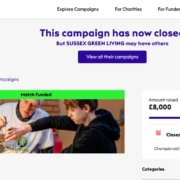
 Following a competitive application process, Sussex Green Living has been selected to take part in the Big Give Earth Raise—a national match-funding campaign launching on Earth Day 22 April.
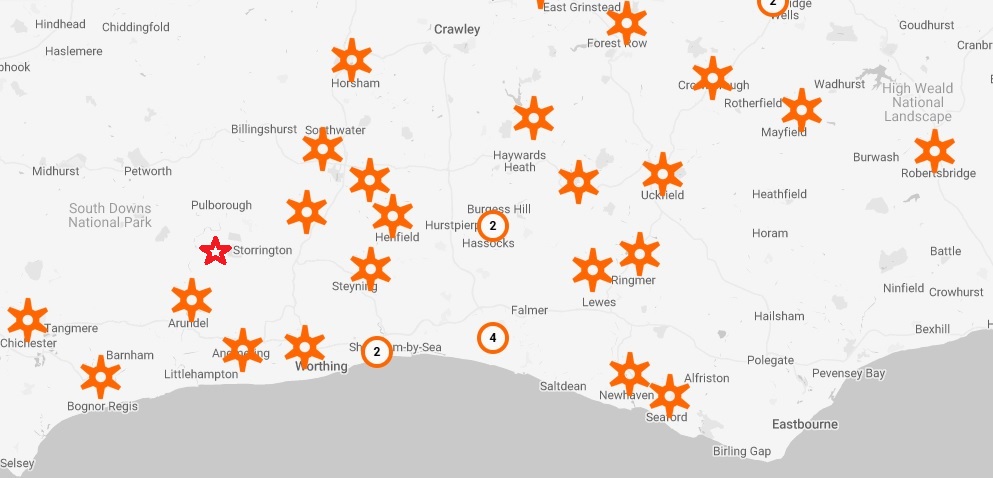 Across Sussex, people are proving that repair is not a thing of the past but part of the future we need to build. From Storrington to Horsham, Lewes to Brighton, Repair Cafés show what a circular economy looks like in everyday life: people coming together to fix broken things, share knowledge and stop waste before it starts.
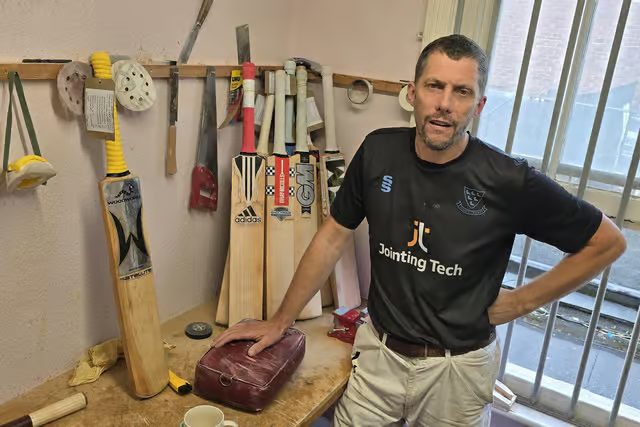 In a small workshop in Haywards Heath, cricket bats are being restored to life. Barney Morris, better known as Barney Bats, repairs around 50 damaged bats each week. After a busy weekend of matches, his workbench can resemble a triage unit as bats arrive in need of care and attention.

 Growing together – Food – Fun – Family – Free
 It’s not just Spring in the air!
 Sussex Green Living
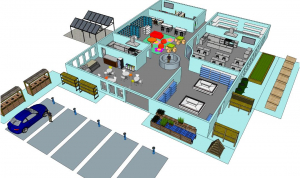 It is easy to focus on finances and ignore the climate just now, when the cost-of-living crisis is hitting us so hard. However, the two are fundamentally interlinked. Reassessing how we live and what we consume ultimately saves resources for our planet and puts money into our pockets too.
 Community Wellbeing Garden
 Sussex Green Living
 Sussex Green Living
 Biffa
Biffa