

The latest news, stats and facts on key environmental issues. The latest news from Sussex Green Living.

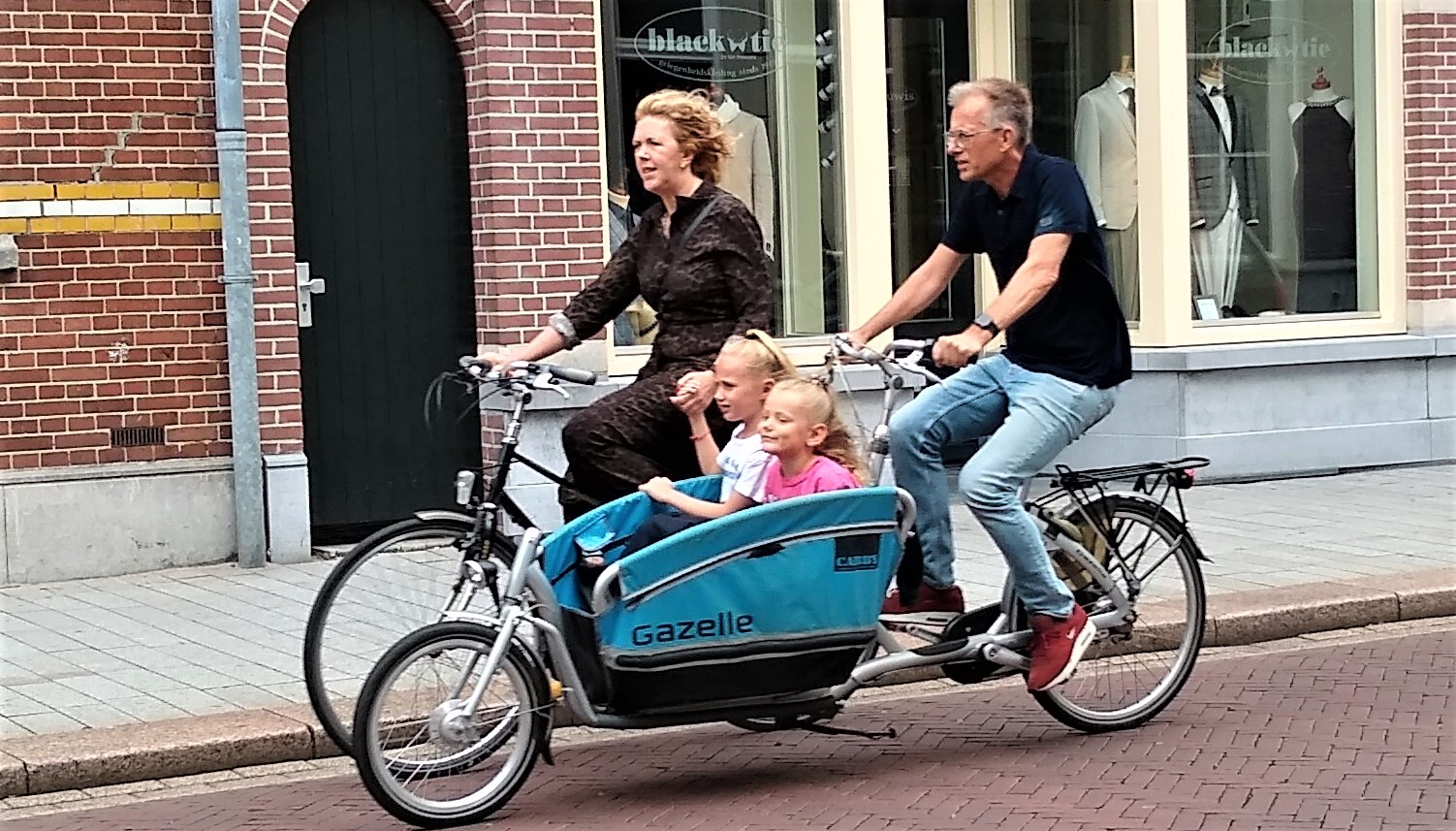
Knowing what to do in the face of the global climate crisis can often seem a daunting task.
Whilst it’s true that the really big changes need to be prompted by Government action there’s still a lot you can do as an individual. Small changes build up, especially when other people join in.
A major cause of global warming is our over-reliance on cars in towns and cities, which also contributes to poor air quality, traffic congestion, road danger and noise, and the obesity crisis.
One small step you can take is to cycle for those short journeys where through force of habit you instinctively get in the car.
For short journeys in town it’s often quicker by bike, and it saves you money too. What can be just as important – even where the journey time is slightly longer than by car – is that the time taken can be remarkably consistent, meaning you don’t need to leave extra time for your journey just in case you get stuck in traffic. Read more


Seals on our Sussex coast show that conservationists are getting something right. It’s not just Gavin the well-loved harbour seal who sports with paddle boarders in Littlehampton; we can see these marvellous creatures now in Chichester harbour, Eastbourne and in the Adur, where two seals named Bramble and Rivier (who swam in from Belgium) have generated their own following.
According to Zoologist Stephen Savage of the Sea Watch Foundation, it’s a wonderful sign that our waters are clean enough to support food for these large animals. “They like mullet, flatfish and crabs mainly” he explains, “but they hunt anywhere in tidal or brackish water, even as far up as The Black Rabbit at Arundel.”
Stephen, who is County Recorder for Sea Mammals, has studied seals since 1997. The public have been stalwart supporters. Initially he collated sighting reports, but eight years ago increasing seal numbers allowed him to build a picture of populations in Sussex. “We hope to learn even more through citizen science” says Stephen. “The interaction of seals and people will significantly add to this story.” Read more

Thanks to our Tesco Community Grant we were able to take our Bright New Futures Roadshow to St Mary’s CofE Primary School in Pulborough on the 22nd July . This is a large school with a new teacher leading their Eco activities. We started the planning process with the school many months in advance, then […]
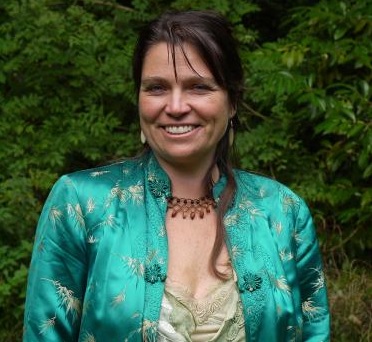
How Green is Copper? With a rush for electric cars and renewable power some of the most biodiverse areas on Earth are under threat. Hidden beneath primary forest teeming with life metals lay buried.
Whilst Ecuador was the first country in the world to put the #rightsofnature in its #constitution, sadly this has not stopped foreign interest from wanting to mine one of the most biodiverse places on the planet.
The Los Cedros Reserve is almost 12,000 acres of untouched cloud forest. Imagine over 400 different kinds of orchids, over 350 species of birds, 800 different kinds of moths and uncountable species of fungi. 5 critically endangered and 31 endangered species make this their home.
This little known reserve is more biodiverse than the Amazon.
Still the Canadian mining company Cornerstone Capital Resources buy off the local people with trinkets , beads and the promise of work. They do not talk about the potential risk of contaminating their water source or of what will happen when they leave.
The world is watching this vital case. If Nature wins it means that not only Los Cedros can breathe a sigh of relief but over 6 million acres of protected land which is under the threat of mining. This will in turn set an international precedent. Read more
What is in the Great Green Hamper? Bottle of Method – Wild Rhubarb anti-bac Bottle of Method – Peach Blossom anti-bac EcoVibe dish brush EcoVibe dish soap EcoVibe compostable sponge x 2 Circular & Co reusable 227ml cup Sea Saver microfilter bag Isle of White Gin 3 x mini Mermaid Gin Crumbs Brewing beer gift […]

We have decided to remove sponsorship from Amazon from our website with the realisation that it contributes to so many of the problems we are all striving to resolve.
The brilliant choice of the word “Amazon” is a stroke of genius- linked with one of the most life-sustaining, essential things on the planet!
Calling a Dumfries warehouse a ‘fulfillment centre’ smacks of Orwell’s gripping novel, 1984. Maybe it should properly be called a ‘full-Fill-ment centre’ as brand new products such as laptops and TVs are simply sent away to be buried in the ground from it, as landfill is cheaper than re-distributing them around the UK or donating them to schools and hospitals.
As the richest man in the known universe, Amazon owner Jeff Bezos made UK sales worth £14,000,000,000 in one year (2019) alone. He has a personal fortune of £155,000,000,000. However, he pays minimal UK tax by claiming small profits. It seems customers are unaware of the full story of buying and throwing away, over and over again, while gradually undermining small, local businesses in the long term. One charming designer I met cheerfully described his job, (working for several large chains based in China and Horsham) by saying, “I make landfill!” Read more

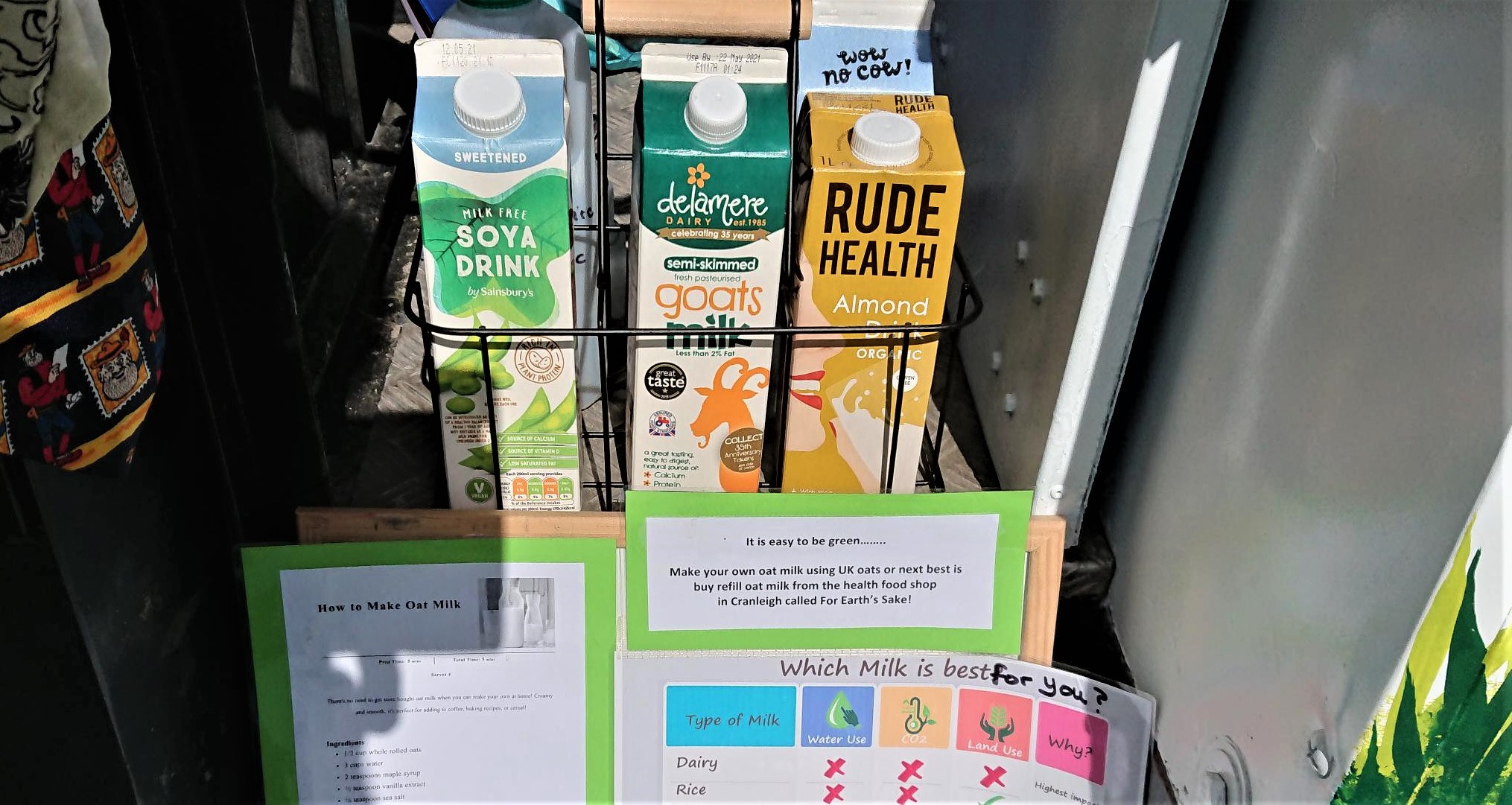
If you are reading this column, there’s a good chance that you have an urge to do ‘the right thing’. You’re the sort who’s first to help in a crisis. You were the first to raise the subject of climate change. And the first to actually do something about it! And what better first step than to start making educated choices in the way you shop? No more plastic bottles and dodgy packaging. You started shopping locally, avoiding waste, noticing how sustainable food might or might not be. And you are right.
But it’s complicated, isn’t it?.
Take milk as an example. To produce it from a cow is incredibly destructive. A study by Oxford University tells us that producing a glass of dairy milk results in almost three times the greenhouse gas emissions of any non-dairy milks! It takes approximately 120 litres of water, 150 square centimetres of land and produces 0.6 kg of carbon emissions to produce one 200ml glassful.
For almond milk, however, the figures are 78 litres of water, a mere 10 square centimetres of land and 2kg of CO2 emissions. It sounds like a no brainer, until you drill down – which is exactly what they have had to do in California! The Golden State is responsible for 80% of the world’s almond production which requires enormous plantations which slowly deplete and dry the soil. Farmers drill ever deeper to quench their thirsty crops, bringing up saltier water. This speeds up desertification, which in turn leads to fires, and the strong possibility of no more almond trees. Read more


Keith Colin at Sompting
Earlier this month I had the great pleasure of being shown around two of the four sites managed by Keith and Liane who, along with a great team of trustees run the charity Sustainable Sussex.
Volunteer Fiona, who lives in a flat 20 minute’s bike ride away, told me, “I’ve been helping for two years now. It was a real lifesaver during lockdown!”
The small area (it’s less than one acre) is rich in birdsong – all the more noticeable as there is little or no traffic noise. The scent of elderflower blossoms fills the air as swallows swoop low over the small fields. Read more

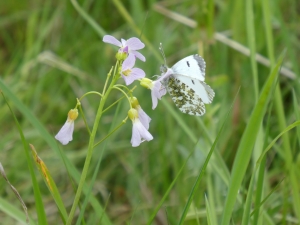
Female Orange tip
Dave Goulson is Professor of Biology at the University of Brighton. His books, include ‘The Garden Jungle’ and ‘Gardening for Bumblebees’.
At a recent talk, he explained that we need insects to pollinate our food crops. In the UK some growers are now employing people to hand-pollinate their plants, because insect numbers have declined so dramatically.
We can help here though. The area of gardens across England is over 4.5 times that of national nature reserves, so by gardening for nature together we can make a difference.
As part of the CPRE Sussex ‘Festival of Spring’, Prof Goulson explained how we can garden to save the planet: Read more


Click to view presentation
At our last Sussex Green Ideas Zoom event on Wednesday 16th June we learnt about the challenge of transitioning from gas and the urgent need to cut the 17% of UK emissions that come from heating our leaky homes. You can view the Homes after Gas presentation here.
It helps that we can now choose renewable energy instead of fossil fuels – and generally save money, this is our energy cost comparison and switching site www.Bigcleanswitch.org/SussexGreen it only takes about 5 minutes to switch!
But the next step is the end of gas heating. From 2025 new builds will not be connected to the gas grid. The government hasn’t yet set a cut off date for new gas boilers in existing homes but it will need to do this soon. Read more
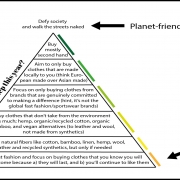
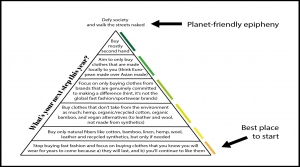 What’s your next strategy for sustainable shopping? Find out…
by Oisin Collishe
With the shops re-opening now, can we use this moment to briefly pause and ask ourselves if we need to rush out to buy stuff which we might use for a season then discard?
USEFUL QUESTIONS TO ASK WHEN SHOPPING:
(We don’t necessarily even need to know the answers!)

By Paul Hannam, Chair of Greening Steyning
As Sir David Attenborough and others have warned 2021 is a turning point if we are to get on top of the climate and ecological crisis we are all facing.
Whatever your politics, whatever your lifestyle, whatever your values or interests, we have to rise above our individual differences to work together for the common good.
Will we look back and see the pandemic as a watershed in history, the moment when we acted as global citizens and community champions? If there is one definitive lesson from the Covid-19, it is that we have an astonishing capacity to unite under a common purpose. If we can maintain this resolve, we can prevent climate and ecological collapse.
Each one of us has a role to play as individuals, families, employees and members of a community. On our own, it is very hard to make the changes we need to. Working together, we can transform our communities. Through mutual support and community action, street by street, we can achieve our vision. Read more
Nuthurst Community Allotment by Sally White
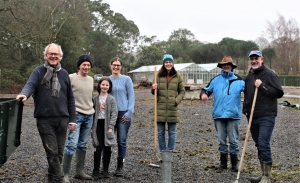
One of the better things that happened in 2020 was that Jonathan van der Borgh turned up on Angus White’s doorstep. He brought with him the brilliant idea to create a new community allotment in Nuthurst. That idea is now becoming a reality.
As soon as we spread the word via the December issue of our local Parish Mag, The Link, we quickly gathered an extremely enthusiastic team of Nuthurst-ers! With seven pairs of hands on board, we cleared the ground of the old Architectural Plants’ site which has now moved to Pulborough. We weeded, shovelled soil, ploughed, rotavated, spruced up the glasshouses, chitted spuds, amassed loads of seeds and sowed.
We did another ‘shouting-about-how-great-we-are’ routine in The Link and on Social Media. These shout-outs have been very well received; we have had a flood of interest from local residents and also from local businesses who are keen to contribute much needed materials and equipment. Have a look at our website for details of how to get involved and for a list of the businesses who have been kind enough to donate to the allotment. Read more
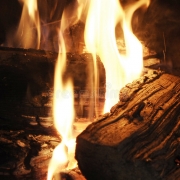
 Some fear that the fires are a danger to health and the environment.
And a Billingshurst man stoked up anger when he called on people to stop using them and suggested that the fires were merely ‘a fashion statement.’
Robert Bishop maintained that it was impossible to follow Government Covid advice and open windows because of smoke from neighbours’ wood fires.
And they maintain that wood is a renewable source of energy, unlike oil or gas.
However, Asthma UK says burning wood gives off tiny particles that can get into the airways.
A spokesman said: “Breathing them in can make your airways inflamed, bringing on asthma symptoms”.
Carrie Cort, founder of Sussex Green Living “If you’re using a wood-burning stove, make sure it’s well maintained, and that you’re using dry woods.”
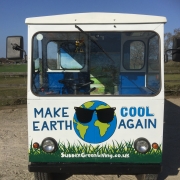
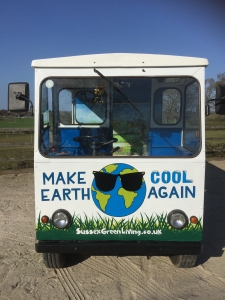 Horsham District Council is delighted to announce that funding from its recently launched Community Climate Fund initiative is set to benefit a local outreach project to create a mobile educational Eco Station.
Local charity Sussex Green Living applied for a grant from the Council’s Horsham District Community Climate Fund and successfully received £5,000 to get their Inspiration Eco Station on the road.
Volunteers at the multi-award winning Sussex Green Living have created a unique environmental outreach project using a refurbished 1974 milk float, they plan to show local people that there is a Bright New Future ahead.
The Inspiration Eco Station is a colourful and engaging mobile display that will travel to schools, colleges, faith groups and community events to share top tips on how residents can save money whilst reducing their negative impact on the planet. From tackling eco home and gardens, waste prevention and recycling, fast fashion to low carbon career opportunities there will be lots of inspiring ideas, solutions to help people save money and live more sustainably. Read more
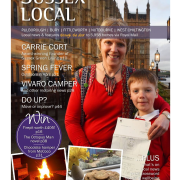
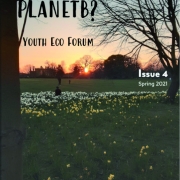
The April 2021 edition of this quarterly publication is out, and its fabulous as usual! Browse through accessible and beautifully illustrated articles: opinions on the pandemic’s impact on the environment to vegan feasts and managing food waste, Bee SOS, the Eco-Church, and the importance of seaweed. Interesting, engaging and inspiring.




 West Sussex County Times