
Sussex Green Living’s new Pollination Education Station initiative
Sussex Green Living’s new Pollination Education Station initiative! We are proud to announce the launch of our latest initiative, the Pollination Education Station and we are now calling on businesses, pubs, councils, schools, groups, and individuals across West Sussex to get involved.
The Pollin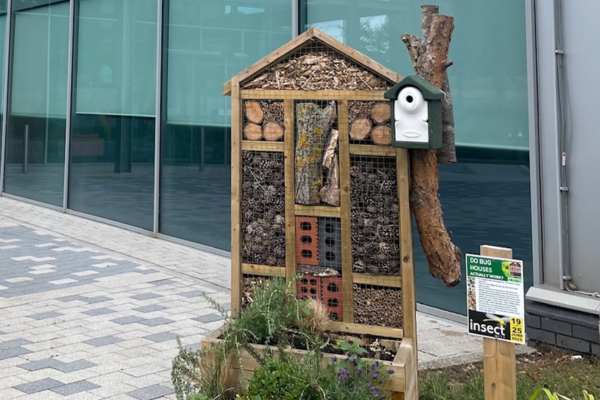 ation Education Station initiative is a response to the urgent need to address the declining population of pollinators in Britain, which are vital for food production and maintaining ecosystems.
A Pollination Education Station is an eco-luxury destination for essential winged friends, such as solitary bees and butterflies. Each station is a purpose-built structure made from repurposed materials and provides a safe haven for pollinators to shelter, breed, and rest during their vital pollination missions. Each station comes with an educational plaque, creating awareness about the vital role of pollinators and offering suggestions for personal action. Plus a wooden ‘sponsored by’ sign. Read more
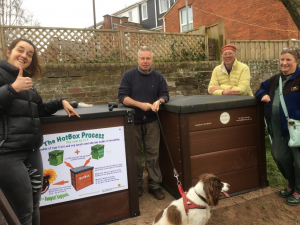 Nicky Scott, otherwise known as Mr Compost, is based in Devon and for many years has been the driving force in Community Composting across the county. This is his story.
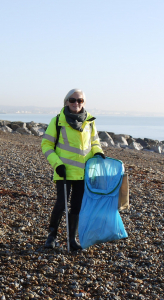 Keep Lancing Lovely – Ten Years Cleaning Sussex Beaches. Down here on the coast, we’re lucky to have organisations like
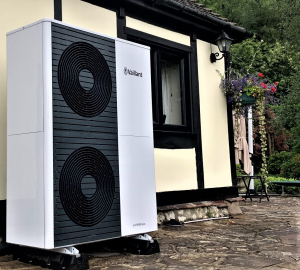 Solutions for Sustainable Heating: Navigating Heat Pumps -With too much heat in the summer and not enough in the winter, Sussex Green Living is delighted to showcase Option Energy Solutions who we met at the Amberley Eco-Day last Summer. They won a Highly Commended National award in June 2023 for their Domestic Air Source Heat Pump work, and our author Michael,
 Shipley Community Hub: At the Heart of a Village.
 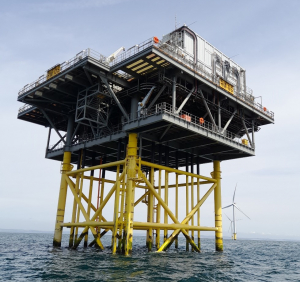 Recently, as a milestone birthday treat, I took a boat trip out to the Rampion Wind Farm which lies 13 kilometres from the shoreline on the South Coast and covers a total area of 72sq. kilometres.
 From the Path to the Shop: Natural community food production. With all the worry about climate change and food production, it feels important to get to know one another to develop good practices for improving soil fertility and the production of local organic food.
 Community Wellbeing Garden
 Sussex Green Living
 Sussex Green Living
 Biffa
Biffa